QUICK ANSWER
An ADHD-friendly Florida real estate exam study plan should make the next action easy to start: one rule, a short closed-book question set, and a brief review of the reason for each miss. Keep a written restart note, revisit material on later days, and build toward sustained timed practice. Short sessions are a starting format, not a substitute for preparing for the full exam.
Reviewed October 20, 2026. This is an adaptable study routine, not ADHD treatment or a diagnostic tool.
Start with a task you can finish
“Study contracts” leaves too many decisions open. “Read the explanation of an option contract, close the book, and explain one example” tells you where to begin and when the task ends.
If you have ADHD or struggle with focus, try reducing the setup work. Open the right lesson before the session, keep one error log, and write the first action on paper. You do not need to build a new productivity system before learning the rule.
NIMH's adult ADHD resource explains that persistent attention and organization difficulties can be part of ADHD, but occasional distraction does not establish a diagnosis. Seek an appropriate professional assessment if you are concerned about symptoms. The plan here can be adapted regardless of diagnosis.
Try a three-part study session
These times are examples. Shorten or extend them based on what lets you do useful work.
| Part | Example time | What you produce |
|---|---|---|
| Learn one distinction | 5 minutes | A plain-language rule and one contrast |
| Recall and apply | 10 minutes | A few answers chosen without notes |
| Review and leave a restart note | 5 minutes | One corrected explanation and the next action |
Suppose the topic is deeds. Learn the difference between a general warranty deed and a quitclaim deed. Close the material and explain which promises the grantor makes. Then answer a new scenario. If you get it wrong, note the precise confusion rather than copying a whole paragraph.
A useful restart note is: “Next session: explain why a quitclaim deed does not guarantee good title, then solve a changed example.” It saves you from reopening five tabs to remember where you stopped.
Design for the distraction that actually happens
Match the change to the problem. If notifications interrupt you, use a focus setting during the session. If the phone is also your study tool, open only the intended mode and put the next task on paper. If you keep searching for better materials, choose one main source for the current topic and reserve a separate time for checking disputed facts.
For some people, a quiet room helps. Others find that studying alongside a quiet partner makes it easier to begin. Test the arrangement on actual work: can you explain more rules and finish the planned questions? Do not assume every technique marketed for ADHD will fit you.
Use a diagnostic to choose the next rule
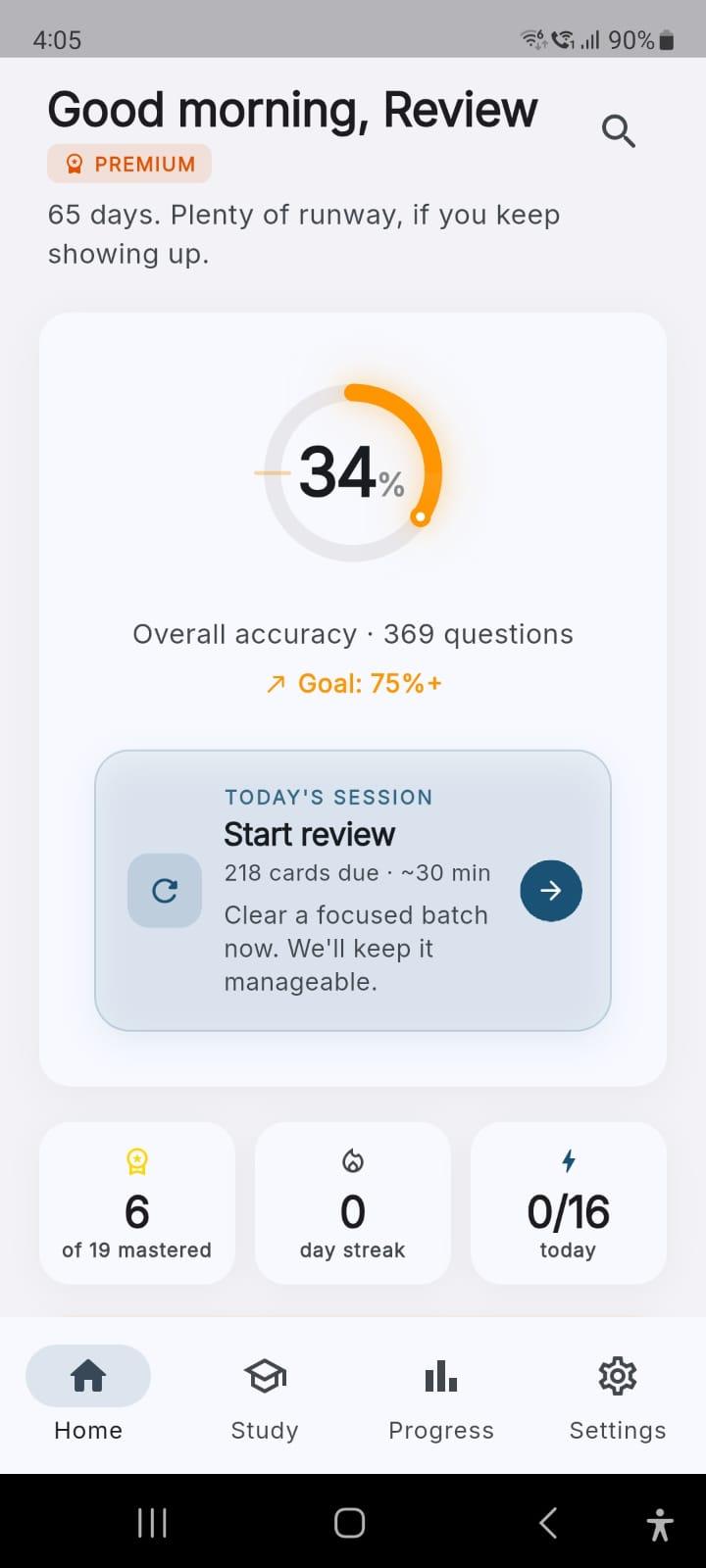
The sales associate exam covers 19 areas. Use the study guide to organize the lessons you need. Use the official topic breakdown to keep track of coverage, then use misses to find a specific repair.
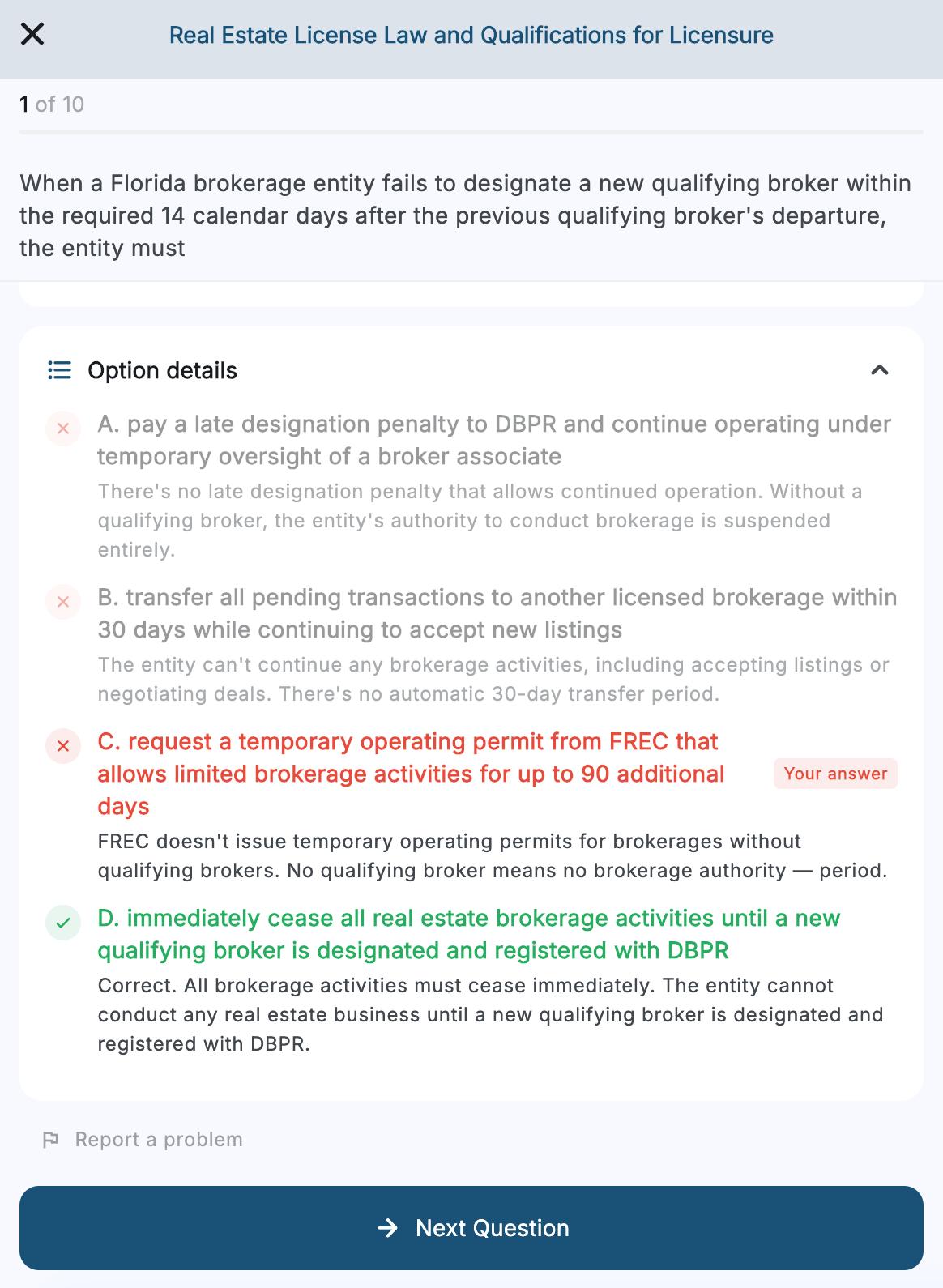
“Brokerage relationships are weak” is a starting label. “I confuse a transaction broker's limited confidentiality with a single agent's fiduciary duties” gives you a lesson to study.
Small topic samples are noisy. One correct answer does not prove mastery, and a single wrong one does not mean you must relearn an entire chapter. Confirm the pattern with explanation and changed questions.
Remember what you studied without rereading everything
At the next session, recall yesterday's rule before opening the explanation. Later in the week, use it in a mixed set. Keep uncertain rules in the review list until you can explain and apply them after a delay.
If you forgot, check the source, close it, and try again. Forgetting identifies what needs another retrieval attempt. Rereading can help repair understanding, but it should lead back to recall and application. The flashcard guide shows how to make cards that test more than recognition.
Keep the error log small
Use four fields: topic, cause, corrected rule, and next check. Include guesses that happened to be correct. Avoid a giant spreadsheet that takes longer to maintain than the study itself.
| Miss | Useful log entry |
|---|---|
| Selected the opposite answer on an EXCEPT stem | “I answered the true statement. Next time identify the task before reading choices.” |
| Forgot a formula | “I need the relationship first, then the numbers. Solve a fresh version tomorrow.” |
| Chose a familiar phrase without understanding | “Explain why the closest alternative is wrong before moving on.” |
Give math its own small slot
Choose one problem type. Write what the question asks, the formula, the substituted numbers, and the units. Then solve a changed problem without the model answer. A correct calculator result cannot repair an incorrect setup.
Use the math formulas guide as a reference during learning, and put it away during closed-book checks.
Build toward the full testing session
The ordinary sales associate exam has 100 questions and 3.5 hours. A routine consisting only of five-minute drills leaves sustained reading and pacing untested.
Move from short topic sets to longer mixed sessions, then a full simulation when you have covered the outline. Rehearse under the timing and permitted conditions that will apply to you. Review the session before scheduling another one. Your pace of progression depends on your starting knowledge and available time; no four-week schedule guarantees readiness.
If you still cannot complete a realistic practice session or major areas are unstudied, consider whether the appointment fits your preparation. Check the rescheduling deadline before making a change. Repeatedly postponing without changing the study method is unlikely to resolve the same pattern.
Handle accommodations separately and early
DBPR's special testing instructions include documentation guidance for ADHD and learning disorders. Approval depends on the documented functional limitation and requested support. A diagnosis does not automatically grant double time.
Start before booking an accommodated appointment and follow the accommodations guide. A school approval does not automatically transfer. Continue appropriate clinical care with your own professional; this article does not advise medication changes.
If you miss a day, restart with the next small task
Do not turn a missed session into a requirement to complete two long sessions tomorrow. Open the restart note, recall one earlier rule, and complete the next planned block. If interruptions repeat, shorten the commitment or change its time. Track what you learned, not just whether a streak remained intact.
Frequently asked questions
How long should I study at a time if I have ADHD?
There is no universally correct duration. Try a short block with a clear output, then adjust. You also need eventual sustained practice for the actual exam conditions.
What if I keep forgetting what I read?
Try recalling the rule before rereading, explain a new example, and revisit it on a later day. If the explanation is still unclear, return to instruction instead of repeatedly testing a misunderstood rule.
Can I use music or study with someone else?
Test whether it helps you complete and understand the work. Choose a setup that supports your actual task rather than a method simply because it is described as ADHD-friendly.
Can Pass Florida treat focus problems?
No. It is an exam preparation tool. Its topic practice and progress features can support a study routine, but it does not diagnose ADHD, provide treatment, or approve accommodations.
Start the next block
Try a free practice question and leave yourself one useful restart note. Download Pass Florida if you want topic practice and review in a single study tool.
Sources and method
Checked October 20, 2026: DBPR candidate booklet for the exam format, DBPR special testing instructions for the application route, and NIMH adult ADHD information for the distinction between study difficulties and a clinical diagnosis. Session lengths and examples are editorial suggestions, not clinically validated ADHD interventions.