QUICK ANSWER
If Florida real estate exam nerves make you rush, reread, or freeze, give yourself a rehearsed response: identify what the question asks, make one defensible choice, flag it if necessary, and move on. Practice that response before test day. Also check whether your difficulty is anxiety, missing knowledge, unfamiliar timing, or a mixture. Each needs a different next step.
You can know a topic and still feel unsettled in a testing room. You can also feel anxious because you have not practiced the skill the exam asks you to perform. Calling every miss “nerves” makes it harder to fix either problem.
Exam procedures and health-resource links checked October 20, 2026. The routines below are study suggestions, not treatment or a diagnosis.
Is it test anxiety or a preparation gap?
Compare the same skill in several conditions. Use unfamiliar questions so memory of the answer does not distort the comparison.
| Pattern you notice | What to investigate |
|---|---|
| You cannot explain the rule even without a timer | Return to instruction and a worked example |
| You explain it calmly but rush past key words under time | Practice a short reading routine, then gradually add timing |
| You know the answer but spend minutes doubting every choice | Set a reason-based review rule and rehearse moving on |
| Symptoms disrupt study, sleep, ordinary activities, or attendance | Consider support from a qualified health professional |
| The room, check-in, and computer worry you most | Learn the official procedures and prepare the logistics |
This comparison does not diagnose an anxiety disorder. It helps you decide which part of your preparation to change. NIMH's stress and anxiety resource recommends professional help when stress or anxiety persists or becomes hard to cope with.
Reduce the unknowns before exam day
The DBPR candidate booklet describes a closed-book, 100-question sales associate exam with 3.5 hours of testing time. It also explains the computer tutorial, question review controls, identification, and education proof. Pearson's current Florida program requires a physical test center.
Build a short checklist: confirmation, route, arrival time, valid ID, valid course proof, and permitted calculator. Resolve name mismatches or missing documents early. Use the exam-day checklist rather than rereading conflicting social posts the night before.
The booklet calls for arrival 30 minutes before the appointment. Its computer tutorial does not use your exam time. Learn how to flag questions and view unanswered items during that tutorial, while staff can explain the controls.
Rehearse a reset for a difficult question
Try this during practice, and keep only the parts that help you:
- Pause briefly and let your breathing settle at a comfortable pace.
- Find the task word: must, may, except, best, or first.
- Name the issue in plain language: “This is asking when disclosure is due.”
- Use the facts supplied. Eliminate choices for a specific rule-based reason.
- Choose the best supported answer. Flag an unresolved question and continue if necessary.
There is no proven universal 90-second reset or required breathing count for this exam. A small routine is useful only if it helps you return to the task without consuming the time you need elsewhere.
For example, you see a long mortgage question and think, “I am bad at math.” Replace that global judgment with the actual task: “Find the loan amount, then multiply by the stated rate.” If you still do not know the setup, that is a skill to practice after the session, not evidence about your ability as a person.
Build timing gradually
Start with a manageable closed-book set. Answer without checking explanations halfway through, then review it afterward. Extend the duration as you can maintain the routine. Eventually practice the sustained conditions of the exam, using any approved accommodations that will apply.
Record what happened when you felt stuck. Did you miss a negative word, forget a rule, make an arithmetic error, or spend too long seeking certainty? Your wrong-answer log should capture the cause, not just the score.
See the time-management guide for pacing examples. A rigid demand to answer every item in the same number of seconds can add pressure without helping. Short definitions and multi-step calculations take different amounts of time.
Change an answer for a reason
“Never change your first answer” is an unhelpful rule. So is changing an answer because a choice suddenly feels unlucky.
During review, change it when you can identify a concrete reason: a missed negative, a calculation correction, or a rule that clearly excludes the first choice. If you have no new evidence, rereading the same item repeatedly may only use time. Check unanswered questions before revisiting already supported answers.
The day before and the morning of the exam
Prepare your documents and route, use a familiar evening routine, and choose a stopping point for study. Avoid making a brand-new question bank your final verdict on readiness. If you do review, keep it specific: one weak rule, a few familiar calculation setups, or a short wording exercise.
Use your normal food and drink routine where practical. NIMH's general stress guidance includes maintaining a sleep routine and avoiding excess caffeine. This page does not recommend medication changes, supplements, or a treatment plan.
If you need help for persistent or severe symptoms, speak with an appropriate professional. If a documented disability creates a testing barrier, start the DBPR accommodations process early. Ordinary practice routines do not replace approval for extra time or other arrangements.
After a failed attempt, separate the result from the story
Write down what you can verify: the official score, topic feedback provided, pacing issues, and any reported incident. Avoid rebuilding confidential exam questions from memory. Then choose one change you can test in practice, such as reading the task word before the choices.
A failed attempt does not show that anxiety was the only cause, or that another failure is inevitable. Use the retake hub to rebuild around evidence.
Frequently asked questions
Should I reschedule if I feel nervous?
Check fresh performance, documents, and how symptoms affect your ability to test. Nerves alone do not establish readiness or unreadiness. If you are considering a change, review Pearson's two-full-calendar-days deadline in the rescheduling guide.
What if I freeze on the first question?
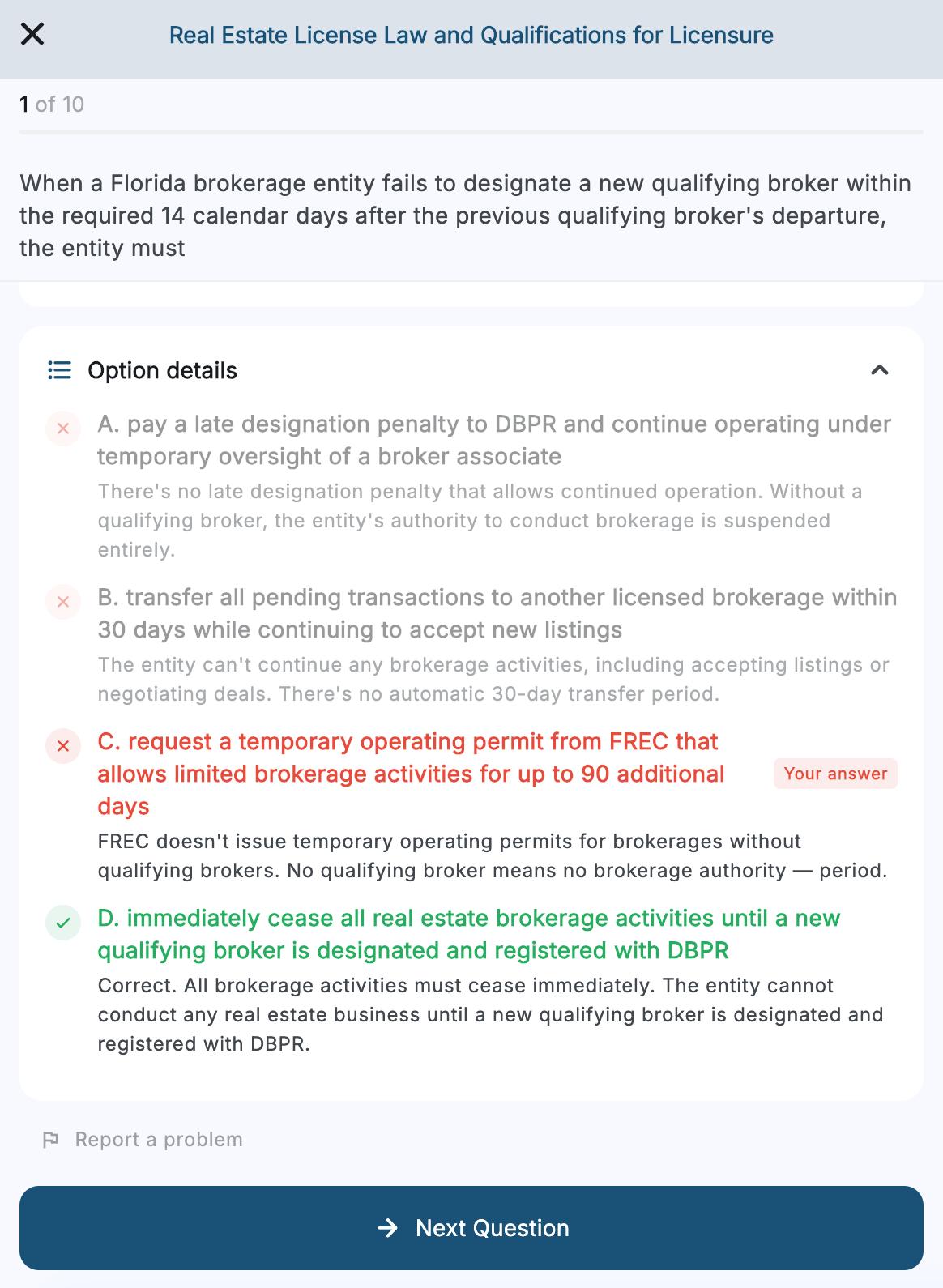
Use a response you have practiced: identify the task, eliminate what you can, make a choice, and flag the item if needed. One hard question does not tell you how the rest of the exam will go.
Can I get extra time for test anxiety?
DBPR evaluates documented disability-related accommodation requests individually. A blog cannot determine eligibility. Follow the official process before scheduling an accommodated appointment.
Can practice questions cure exam anxiety?
No cure is promised. Practice can help you learn the material and rehearse testing routines. Persistent or disabling anxiety deserves appropriate professional support.
Try one small session today
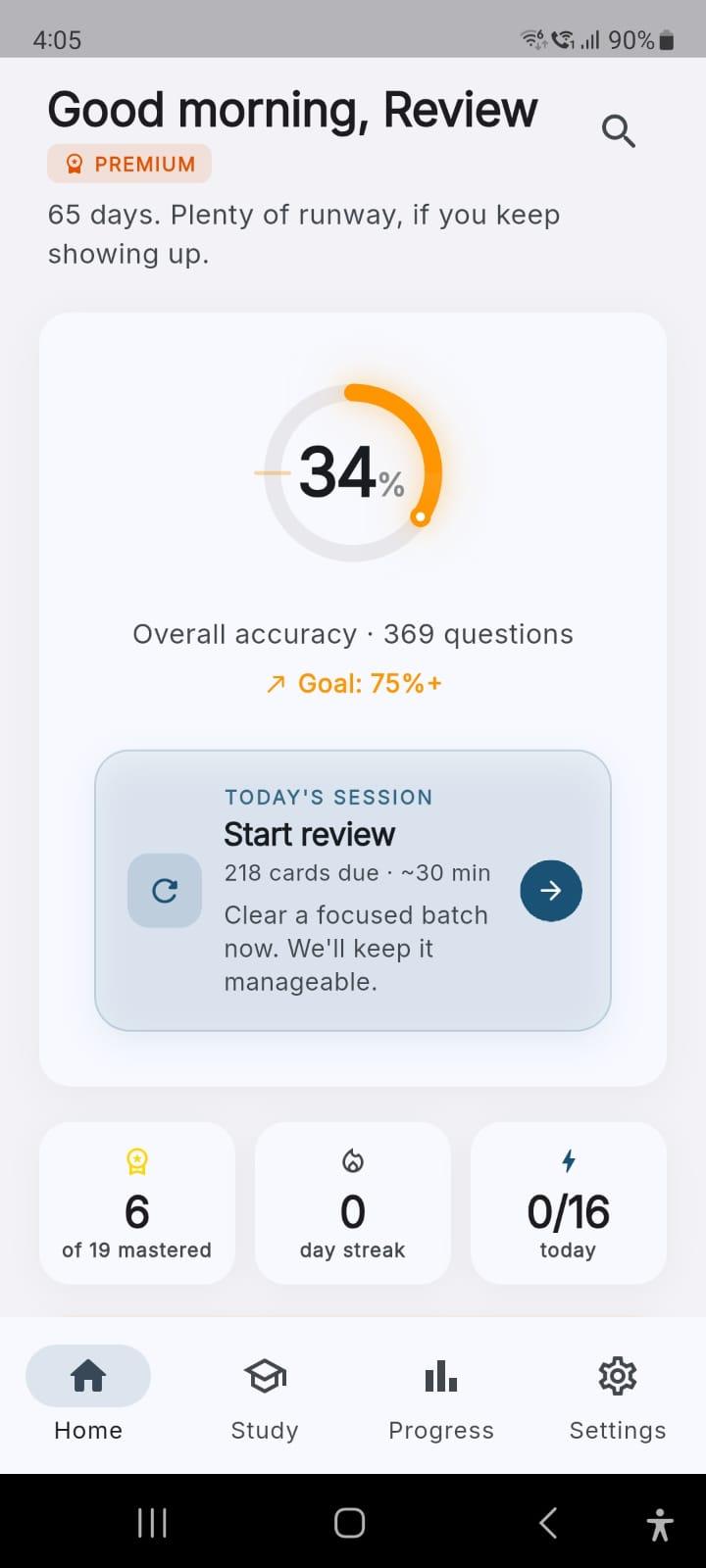
Try a free question, then explain your answer before viewing feedback. Download Pass Florida if topic practice and progress review fit your routine. It is an exam preparation tool and does not diagnose or treat anxiety.
Sources and approach
Checked October 20, 2026: DBPR candidate booklet, Pearson Florida Real Estate, DBPR accommodations, and NIMH stress and anxiety guidance. The practice routine is editorial coaching; no score gain or clinical outcome is claimed.