QUICK ANSWER
To get a real estate license in Lakeland, you follow the Florida sales associate path: be at least 18, have a high school diploma or equivalent, have a Social Security number, complete a Florida-approved 63-hour pre-license course unless exempt, submit the DBPR RE 1 application, complete Livescan fingerprints, pass the Pearson VUE sales associate exam, then activate the license with a Florida broker.
Lakeland does not have its own city license. The license is statewide. What changes locally is the market: Publix Super Markets is headquartered in Lakeland and is one of Polk County's largest employers; Florida Polytechnic University, Florida Southern College (home to the largest single-site collection of Frank Lloyd Wright architecture in the world), and Southeastern University drive student and young-professional housing; Lakeland Regional Health and Watson Clinic anchor medical relocation; the Detroit Tigers have held spring training at Joker Marchant Stadium in Lakeland since 1934; Lakeland has more than thirty named lakes including Lake Mirror, Lake Hollingsworth, and Lake Morton; and Polk County's I-4 corridor concentrates logistics, distribution, and Tampa-Orlando commuter activity.
What this guide covers
- How to get a real estate license in Lakeland: the six-step path
- Lakeland real estate license cost snapshot
- Step 1: Confirm eligibility and your Lakeland path
- Local market intelligence: Lakeland ecosystem map
- Where new agents can start in Lakeland
- Publix Super Markets headquarters and corporate relocation
- University and college anchors: Florida Polytechnic, Florida Southern, Southeastern
- Medical anchors: Lakeland Regional Health and Watson Clinic
- Detroit Tigers spring training and Joker Marchant Stadium
- Lakefront geography and historic Lakeland neighborhoods
- Polk County submarkets: Winter Haven, Auburndale, Plant City, Bartow, Mulberry
- Polk County hurricane and insurance context
- Steps 2 to 4: course, application, fingerprints, and exam
- What Lakeland actually rewards after licensing
- First-year reality in Lakeland
- Step 5: Find a sponsoring broker
- Step 6: Activate and start your first 90 days
- Mistakes Lakeland applicants make
- FAQ
LAKELAND DECISION MAP
| Your situation | Best next move | Watch out for |
|---|---|---|
| You want first-time buyers | Learn financing basics, inspections, appraisals, repair negotiation, and clear buyer education | First-time clients need process confidence, not pressure |
| You want I-4 corridor commuters | Learn Tampa vs Orlando commute tradeoffs, Polk County value, and timing | Do not pretend every commute is interchangeable |
| You want historic or lake-area homes | Learn older-home inspections, insurance questions, NRHP-district context, and renovation vocabulary | Refer inspection and engineering conclusions to licensed professionals |
| You want corporate or medical relocation | Build Publix, Lakeland Regional Health, Watson Clinic, and Florida Polytechnic relocation systems | Corporate buyers expect organized timelines and clean files |
| You are choosing a broker | Ask whether new agents work open houses, new construction, relocation, or first-time buyer leads first | A generic Central Florida pitch may not fit Lakeland |
If you searched "how to get a real estate license in Lakeland," the state checklist is only the first layer. You also need to know when to apply, when to fingerprint, how to prepare for Pearson VUE, which broker model gives a beginner real supervision, and which local lane can realistically create supervised client reps.
The official license is the same Florida sales associate license you would get anywhere in the state. The local career is different. Lakeland is anchored by Publix Super Markets' corporate headquarters, three local higher-education institutions (Florida Polytechnic, Florida Southern College, Southeastern University), two major medical systems (Lakeland Regional Health, Watson Clinic), the longest continuous Major League Baseball spring training relationship in the country (Detroit Tigers since 1934), more than thirty named lakes, and National Register of Historic Places (NRHP) districts that include some of Florida's most distinctive older-home inventory. The market is practical, relationship-driven, and less forgiving of shallow "Central Florida" content than it may look from the outside.
This guide separates official Florida licensing requirements from Lakeland career strategy so you can avoid stale fee claims, vague I-4 talk, and the common mistake of passing the exam without a first-year plan.
How to get a real estate license in Lakeland: the six-step path
Lakeland does not issue a separate real estate license. To work as a sales associate in Lakeland, complete Florida's 63-hour course, apply through DBPR, submit fingerprints, pass Pearson VUE, then activate under a Florida broker.
THE SIX STEPS
Florida sales associate applicants must be at least 18, have a high school diploma or equivalent, have a Social Security number, and answer DBPR background questions accurately.
Use a Florida-approved pre-license provider. This is pre-license education, not exam prep and not continuing education.
DBPR lets you apply before the course is complete. Valid course completion proof is required before you sit for the state exam.
Use an FDLE-registered Livescan provider immediately after submitting the application. Keep the receipt and transaction information.
The Florida sales associate exam is computer based, closed book, 100 multiple-choice questions, and 3.5 hours. You need 75 points or higher to pass. Pearson VUE has Lakeland and broader Central Florida test centers within easy drive.
A sales associate works under a Florida broker. Passing the exam is not the same as being activated to perform licensed services for compensation.
Lakeland real estate license cost snapshot
Lakeland candidates pay the same statewide Florida licensing costs as other applicants, then add local startup costs such as broker fees, association or MLS access, E&O, lockbox, signs, transportation, and savings for uneven commission timing.
The state license is statewide, but your planning budget should include both official licensing costs and local startup costs.
| Cost item | 2026 planning amount | Lakeland note |
|---|---|---|
| DBPR RE 1 application | $62.75 | Listed on the current DBPR sales associate application. Verify inside DBPR before paying. |
| Electronic fingerprints | Often about $50 to $80 | Vendor pricing varies. Use an FDLE-registered Livescan provider and keep the receipt. |
| Pearson VUE sales associate exam | $36.75 per attempt | Listed on Pearson VUE's Florida real estate fact sheet. Pay again if you retake. |
| 63-hour pre-license course | Provider-dependent | Make sure the provider is Florida-approved before you enroll. |
| Exam prep | Optional | Pass Florida is exam prep only. It does not replace the required 63-hour course. |
| Broker, association, MLS, Supra, E&O, lockbox, and tools | Varies widely | Ask your Lakeland-area broker what is required before your first closing. |
Lakeland-area agents most commonly join the Lakeland Association of REALTORS for local board coverage. MLS access for Lakeland and surrounding Polk County brokers typically runs through Stellar MLS, the regional Central Florida MLS that covers Polk, Orange, Hillsborough, Pasco, and other counties. Do not guess on association dues, MLS access, lockbox costs, forms access, or board membership. Ask the broker exactly what is required before you join.
Step 1: Confirm eligibility and your Lakeland path
Confirm the statewide Florida eligibility rules first, then choose a realistic Lakeland first-year lane based on broker support, local demand, and the type of clients you can serve repeatedly.
Then Lakeland adds local decisions that do not appear on the state checklist.
| Local decision | Why it matters in Polk County |
|---|---|
| First niche | A first-time buyer, Publix corporate relocation, medical relocation, college sphere, I-4 commuter, lake-area buyer, and rural-edge client each need different support. |
| Broker model | Team, franchise, boutique, relocation, new-construction, and first-time buyer offices train new agents differently. |
| Local risk questions | Older-home inspections, insurance, financing, appraisals, NRHP-historic-district rules, HOA, CDD, lakefront flood, and commute questions can appear early. |
| Test timing | Pearson VUE availability changes, so confirm open seats inside your Pearson VUE account after DBPR approval. |
Local market intelligence: Lakeland ecosystem map
Lakeland rewards focused local competence more than a generic license. Pick one repeatable starter lane, learn its documents and client questions, and work under broker supervision until the pattern is familiar.
| Local lane | What to learn early | Where new agents often start |
|---|---|---|
| First-time buyers | Financing steps, inspections, appraisals, repair credits, buyer agreements, timeline control | Open houses, sphere, buyer consult practice |
| Publix corporate relocation | Polished buyer process, remote-tour discipline, clean files, neighborhood comparison | Relocation follow-up and team support |
| Medical relocation (Lakeland Regional Health, Watson Clinic) | Physician, nurse, fellow timing; remote tours; commute to medical campuses | Sphere and relocation follow-up |
| Florida Polytechnic / FSC / Southeastern student and young-professional rentals | Lease boundaries, fair housing in advertising, starter-condo and townhome inventory | Broker-supervised rental and first-time buyer work |
| Historic Lakeland (Munn Park, South Lake Morton, Lake Hollingsworth) | Older-home condition, renovation vocabulary, NRHP-district context, inspections, neighborhood character | Open houses and senior-agent shadowing |
| Lake-area and lakefront homes | Flood zones, seawalls, dock rules, insurance, older-home condition | Mentor-supported buyer work |
| I-4 commuter clients | Tampa and Orlando commute tradeoffs, work locations, timing, affordability, resale questions | Relocation follow-up and buyer education |
| New construction and growth corridors | Builder process, lots, options, timelines, CDD and HOA vocabulary, inspection timing | Builder inventory tours and team support |
| Winter Haven, Auburndale, Plant City, Bartow, Mulberry crossover | Polk County comparisons, lake lifestyle, agricultural and former-mining context, local search boundaries | Open houses and referral relationships |
| Rural and land-edge clients | Septic, well, zoning, surveys, access, agricultural language, former-mine reclamation areas, professional referrals | Mentor-supported buyer work |
Where new agents can start in Lakeland
| Starting path | How it works in Lakeland |
|---|---|
| Fastest practical start | Open houses and first-time buyer education in repeatable neighborhoods |
| Best corporate-relocation lane | Build a Publix relocation system: remote tours, neighborhood comparison, fast follow-up, clean files |
| Best medical-relocation lane | Build a Lakeland Regional Health and Watson Clinic referral system anchored to physician hiring cycles |
| Best historic-home entry | Shadow Munn Park / South Lake Morton / Lake Hollingsworth specialists on older-home and NRHP-district inventory |
| Best college-corridor lane | Florida Polytechnic, Florida Southern, and Southeastern adjacent rentals and first-time buyer follow-up |
| Best I-4 relocation lane | Build comparison tools for Lakeland, Winter Haven, Auburndale, Plant City, Tampa, and Orlando tradeoffs |
| Best part-time fit | Weekend open houses plus weekday follow-up, if your broker covers urgent offers and inspection issues |
Publix Super Markets headquarters and corporate relocation
Publix Super Markets is headquartered in Lakeland and is one of Polk County's largest employers. The corporate campus, distribution centers, and Publix-affiliated facilities drive a meaningful share of Lakeland's middle-class economy. Publix is employee-owned and consistently named one of the most-recognized companies in the Southeast.
Practical implications for a new agent:
- Corporate relocation pipeline. Publix transfers, new hires, and promotions create a steady relocation flow into Lakeland from elsewhere in Florida and the Southeast.
- Distribution-center employment. Publix-affiliated distribution and logistics employment supports a substantial workforce-buyer market.
- Polished buyer process. Corporate relocators expect organized timelines, neighborhood comparison tools, clear files, and fast follow-up. Treat Publix-affiliated buyers like a corporate-relocation lane, not casual walk-in clients.
- Sphere effect. A new agent who builds even a small Publix-employee sphere can generate compounding referrals over years.
You do not need to be a Publix employee to serve Publix-affiliated buyers well. You do need to understand the relocation rhythm and apprentice with a brokerage that already serves these clients.
University and college anchors: Florida Polytechnic, Florida Southern, Southeastern
Lakeland has three higher-education institutions that drive student-rental, young-professional, and graduate-buyer demand.
| Institution | What it is | Why it matters to your business |
|---|---|---|
| Florida Polytechnic University | Public state polytechnic university chartered in 2012; STEM focus; located off I-4 in north Lakeland | Drives student rentals, faculty/staff buyer activity, and graduates who stay in the I-4 tech corridor |
| Florida Southern College (FSC) | Private liberal arts college near Lake Hollingsworth; home to the largest single-site collection of Frank Lloyd Wright architecture in the world (a National Historic Landmark) | Cultural anchor for Lakeland; drives faculty / staff housing demand; the Wright architecture is a draw for relocators |
| Southeastern University | Private Christian university north of downtown Lakeland | Adds to the higher-education footprint; affiliated workforce and student rental demand |
Practical implication for a new agent: faculty, staff, graduate students, and recent graduates from any of the three institutions are a meaningful underrated buyer pipeline. Treat those relationships as long-horizon networks, not transactional pipelines.
Medical anchors: Lakeland Regional Health and Watson Clinic
Lakeland Regional Health and Watson Clinic are the two major medical anchors in Lakeland. Together they drive physician, resident, fellow, nurse, and clinical-staff relocation. Lakeland Regional Health operates the Lakeland Regional Health Medical Center, the area's largest hospital; Watson Clinic is one of Florida's largest multi-specialty physician group practices.
Practical implications for a new agent:
- Physician relocation. New physicians and residents arrive on predictable annual cycles. Coordinate with relocation contacts at both institutions where possible.
- Nursing and clinical-staff relocation. A continuous pipeline that supports starter-condo, townhome, and first-time buyer activity.
- Medical commute. Hospital and clinic addresses determine where physician families want to live. Build neighborhood comparison tools anchored to medical-campus commute.
Detroit Tigers spring training and Joker Marchant Stadium
The Detroit Tigers have conducted Major League Baseball spring training in Lakeland at Joker Marchant Stadium continuously since 1934, making it the longest continuous MLB spring training relationship in the same city. The Tigers' presence drives:
- February-March economic activity with visiting fans, hospitality demand, and short-term rental activity.
- Cultural identity that defines Lakeland's civic calendar.
- Local recognition that helps when relocators search for "what's distinctive about Lakeland."
A new agent who can speak fluently about the Tigers spring training tradition has a small but real local-credibility advantage with both Lakeland natives and out-of-area buyers.
Lakefront geography and historic Lakeland neighborhoods
Lakeland has more than thirty named lakes inside or adjacent to the city limits. The central lake system includes Lake Mirror (the city's signature lakefront downtown promenade), Lake Hollingsworth (a 2.94-mile loop walking and running path), and Lake Morton (home to a notable resident swan population). Other lakes (Lake Parker, Lake Hunter, Lake Bonny, Lake Wire, Lake Bentley, and many more) shape neighborhood geography and lakefront submarkets.
Several Lakeland neighborhoods are listed on the National Register of Historic Places, including:
- Munn Park Historic District (downtown Lakeland, NRHP-listed)
- South Lake Morton Historic District (early-twentieth-century residential, NRHP-listed)
- Lake Hollingsworth Drive Historic District (estate-scale older homes around the Lake Hollingsworth loop, NRHP-listed)
NRHP listing alone does not impose design restrictions on individual property owners in most cases, but local historic-designation overlays (where they exist) can. Buyers planning major exterior renovation should verify any local historic-preservation rules with the City of Lakeland Historic Preservation Board before offer. Older inventory also brings inspection, insurance, and underwriting considerations typical of pre-1950 housing stock.
Polk County submarkets: Winter Haven, Auburndale, Plant City, Bartow, Mulberry
"Lakeland" is sometimes used loosely to mean all of central Polk County. A new agent should know the distinctions.
| Submarket | What it is | What's distinctive |
|---|---|---|
| City of Lakeland | Incorporated municipality in west-central Polk County | Largest city in Polk; Publix HQ; college and medical anchors; historic neighborhoods |
| Winter Haven | Separate incorporated municipality in east-central Polk | Home of LEGOLAND Florida; Chain of Lakes; tourism and family-buyer focus |
| Auburndale | Smaller municipality between Lakeland and Winter Haven | Affordable family residential; I-4 access |
| Plant City | Eastern Hillsborough County (technically not Polk) but commute-adjacent | Strawberry Festival heritage; agricultural / family-buyer mix |
| Bartow | County seat of Polk County, south of Lakeland | Smaller-town character; historic downtown |
| Mulberry | Small Polk County city south of Lakeland | Historic "Phosphate Capital of the World"; former-mining reclamation context |
| Lake Wales | Eastern Polk County | Historic Bok Tower Gardens; older Florida resort character |
Confirm which municipality every listing falls under before quoting taxes, code enforcement, building permits, zoning, or police/fire jurisdiction. Polk has multiple distinct local governments and behaviors.
Polk County hurricane and insurance context
Polk County is inland, so it does not face direct Gulf or Atlantic surge. It does face hurricane wind, inland flooding (especially around the many Lakeland-area lakes), and insurance market pressure that affects every Florida property.
Relevant recent storms include:
- Hurricane Charley (August 13, 2004). Category 4 landfall at Captiva Island; tracked diagonally across Central Florida including Polk, causing significant wind damage in Lakeland, Winter Haven, and the surrounding area.
- Hurricane Irma (September 2017). Tracked through Central Florida; caused widespread Polk County wind damage and power outages.
- Hurricane Ian (September 28, 2022). Category 4 landfall on the southwest Florida coast; crossed Central Florida including Polk; caused significant inland wind and flooding.
Florida insurance market dynamics apply to Polk too. Wind mitigation reports (OIR-B1-1802), 4-point inspections, roof age, building age, prior claims, Citizens or private-market eligibility, and flood-zone status can all matter for older homes, lakefront homes, and investor properties. Some Polk parcels, especially lakefront and low-lying corridors, are in FEMA flood zones; lakefront flood underwriting is its own conversation. Route all coverage, eligibility, and pricing questions to a licensed Florida property and casualty agent.
Steps 2 to 4: course, application, fingerprints, and exam
These steps are statewide. Lakeland does not have a separate course, application, fingerprint rule, or licensing exam. Use the complete Florida licensing guide for the current requirements, sequence, forms, and official sources.
For planning, keep the workflow simple:
- Complete a Florida-approved 63-hour pre-license course unless DBPR confirms that an exemption applies to you.
- Submit DBPR Form RE 1. DBPR allows you to apply while the course is still in progress, but you need valid proof of completion before the state exam.
- Complete electronic fingerprints using the real estate ORI listed by DBPR. Keep the receipt and make sure your name and identifying details match your application.
- After authorization, schedule the statewide sales associate exam through Pearson VUE. Confirm the available test center and appointment in your account because locations and seats can change.
Use the waiting time to prepare across the full DBPR outline. The 19-topic exam map, Florida math formulas guide, and fingerprint delay checklist cover the details without repeating the same statewide material in every city guide.
LAKELAND EXAM PREP
Prepare for the statewide exam, then apply the license locally.
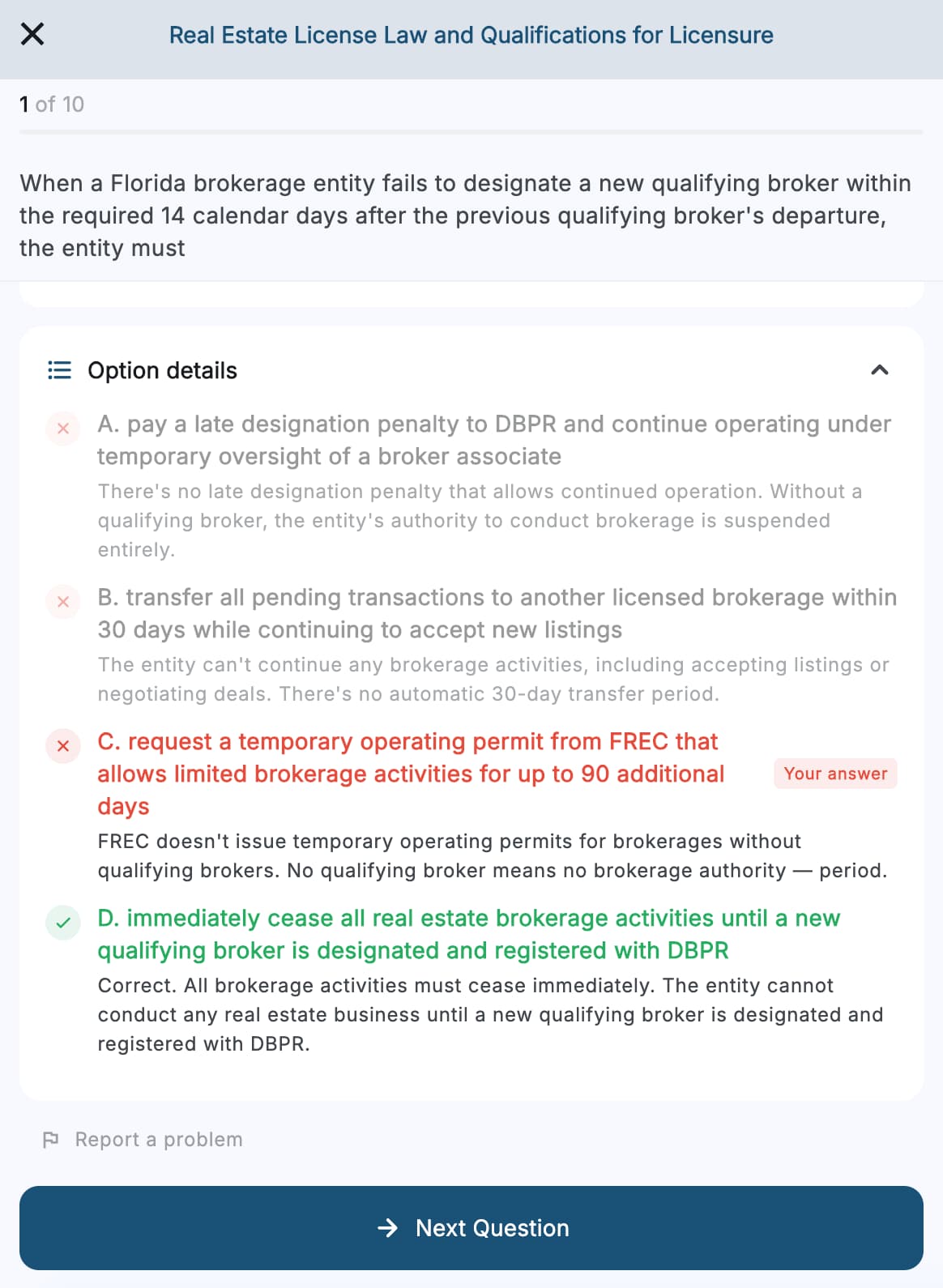
Use Florida-specific practice and a timed readiness check before booking your attempt.
What Lakeland actually rewards after licensing
After licensing, Lakeland rewards supervised repetition, local document discipline, safe routing of legal and risk questions, consistent follow-up, and a first-year lane that fits the local market.
| What the market rewards | What that means in practice |
|---|---|
| Affordability clarity | Many clients are comparing value, commute, monthly payment, and lifestyle against Tampa and Orlando options |
| First-time buyer patience | Lakeland rewards agents who explain process and deadlines without rushing anxious buyers |
| Corporate sphere | Publix, Lakeland Regional Health, Watson Clinic, and the colleges are pipelines that compound over years |
| Local reputation | A practical, responsive agent can earn trust quickly in a relationship-driven market |
| Older-home and NRHP fluency | Historic Lakeland inventory needs careful inspection and insurance conversations |
| New-construction literacy | Growth corridors require builder, HOA, CDD, inspection, and timeline vocabulary |
First-year reality in Lakeland
New agents often ask whether they can make money quickly, work part time, or build a local career without a luxury brand. The honest answer is: sometimes, but only with a realistic system.
| Reality | What to expect |
|---|---|
| Income reality | Most new agents should expect uneven commission timing and several months before a first closing unless they join a team or have a warm sphere |
| Lead generation | Open houses, first-time buyer education, Publix and medical relocation, college sphere, relocation follow-up, builder inventory tours, and local sphere work are realistic starting points |
| Broker support | Ask who reviews first-time buyer, financing, inspection, new-construction, NRHP-historic, CDD, HOA, lakefront flood, and land-edge questions |
| Part-time viability | Possible if your lead source is repeatable and your broker can cover weekday urgency |
Step 5: Find a sponsoring broker
Lakeland candidates should choose a sponsoring broker based on beginner training, contract review, first-transaction supervision, local market support, lead systems, and startup costs, not only commission split.
A Florida sales associate works under a broker. For a new agent, this choice affects training, file review, fees, lead access, transaction supervision, and how quickly you learn the local market.
Ask these before you sign.
| Broker interview question | Why it matters |
|---|---|
| Who reviews my first contracts before they go out? | New agents need supervision before client-facing mistakes happen. |
| How many brand-new agents did you train last year? | Recruiting beginners is not the same as training them. |
| What costs are due before my first closing? | Association, MLS, E&O, signs, lockbox, desk fees, tech, and marketing can add up. |
| Do new agents start with first-time buyers, open houses, builders, relocation, or corporate sphere leads? | Your first lane should be specific. |
| Do you have a Publix corporate relocation system? | Publix is the single biggest local employer; a system here compounds. |
| Who reviews historic-district, older-home, inspection, financing, CDD, and HOA questions? | Lakeland clients ask these early. |
| Do you have a system for I-4 corridor relocation? | Commuter buyers need clear comparison support. |
| How do you handle lakefront flood-zone listings and post-storm permit questions? | Lakefront and post-Charley / post-Ian inventory needs careful underwriting. |
| Can I shadow buyer consults and inspections before I lead them? | Practical repetition matters more than scripts. |
Use how to find a sponsoring broker in Florida before signing.
Step 6: Activate and start your first 90 days
After passing, activate under a Florida broker before performing licensed services. Use the first 90 days to learn systems, pick one Lakeland lane, build supervised reps, and turn follow-up into appointments.
After you pass, activate with your sponsoring broker before performing licensed services for compensation. Then treat the first 90 days as a practical training sprint.
FIRST 90 DAYS
MLS, forms, file review, showing rules, E&O, compliance, lead process, and who answers live transaction questions.
Choose one local lane from the ecosystem map. One repeatable lane beats vague ambition.
Host open houses, shadow inspections, tour builder inventory, practice buyer consultations, and ask your broker to review hard questions.
Track every lead, schedule next steps, ask for appointments, and keep your broker involved before live questions become client problems.
FIRST RENEWAL WARNING
After your license is issued, do not confuse activation with renewal compliance. DBPR's real estate associate requirements say sales associates must complete a Florida Real Estate Commission (FREC)-approved 45-hour post-licensing course before the initial sales associate license expires. This is separate from the 63-hour pre-license course and separate from ordinary continuing education.
If you already passed, use what to do after passing the Florida real estate exam.
Mistakes Lakeland applicants make
AVOID THESE
- Waiting until the course is finished to submit the DBPR application.
- Doing fingerprints before understanding DBPR's sequence and provider requirements.
- Treating the course final as proof that Pearson VUE will feel easy.
- Scheduling the exam without checking ID match, course certificate validity, and current Pearson VUE availability.
- Choosing a broker by commission split before asking who reviews first contracts.
- Treating Lakeland as just "between Tampa and Orlando" instead of learning Polk County buyer patterns and the Publix / colleges / medical anchors.
- Quoting NRHP-listed historic-district restrictions to a buyer without verifying with the City of Lakeland Historic Preservation Board.
- Skipping lakefront flood-zone questions on Lake Hollingsworth, Lake Mirror, Lake Morton, or other lakefront listings.
- Giving legal, inspection, insurance, tax, lending, zoning, HOA, CDD, historic-preservation, or property-management advice outside your role.
- Forgetting that Pass Florida is exam prep, not a 63-hour pre-license course and not continuing education.
Related exam and licensing concepts
| If you need help with | Read this next |
|---|---|
| Full statewide path | How to get a Florida real estate license |
| Timeline and delays | How long it takes to get licensed in Florida |
| Costs | Florida real estate license cost |
| Test-center planning | Florida Pearson VUE real estate testing centers |
| Fingerprint delays | Florida real estate fingerprints delay |
| Course certificate expiration | Florida real estate course certificate expired |
| Exam topics | Florida real estate exam 19 topics |
| Math formulas | Florida real estate exam math formulas |
| Broker choice | Find a sponsoring broker in Florida |
FAQ
How long does it take to get a real estate license in Lakeland?
Most first-time candidates should plan around 10 to 16 weeks. The timeline depends on course pace, DBPR application review, fingerprints, exam readiness, Pearson VUE availability, and broker activation.
Is there a separate Lakeland real estate license?
No. You receive a Florida real estate sales associate license. Lakeland affects your local career strategy, broker fit, and first niche, but not the license itself.
Can I apply to DBPR before finishing the 63-hour course?
Yes. DBPR says the course is not required at application submission. You still need valid proof of course completion before sitting for the state exam.
Where do Lakeland candidates take the Florida real estate exam?
Pearson VUE administers the Florida real estate exam. Pearson VUE's Florida real estate fact sheet lists Lakeland and broader Central Florida test-center locations within easy drive. After DBPR approval, check current Pearson VUE seat availability in your account. Test-center details and available appointments can change.
Why does Publix Super Markets matter to Lakeland real estate?
Publix is headquartered in Lakeland and is one of Florida's largest private employers. The corporate campus, distribution centers, and affiliated facilities drive a steady relocation, transfer, and middle-class workforce pipeline. A new agent who builds even a small Publix-employee sphere can generate compounding referrals over years.
What higher-education institutions are in Lakeland?
Florida Polytechnic University (public, STEM, chartered 2012, off I-4 in north Lakeland), Florida Southern College (private liberal arts, home to the largest single-site collection of Frank Lloyd Wright architecture in the world, a National Historic Landmark), and Southeastern University (private Christian university, north of downtown). All three drive student, faculty, staff, and graduate-buyer demand.
What are the major medical employers in Lakeland?
Lakeland Regional Health (operates the Lakeland Regional Health Medical Center) and Watson Clinic (one of Florida's largest multi-specialty physician group practices) are the two major anchors. Together they drive physician, resident, fellow, nurse, and clinical-staff relocation.
How long has Detroit Tigers spring training been in Lakeland?
The Detroit Tigers have held Major League Baseball spring training at Joker Marchant Stadium in Lakeland continuously since 1934, making it the longest continuous MLB spring training relationship in the same city.
What are the National Register historic districts in Lakeland?
Several Lakeland neighborhoods are listed on the National Register of Historic Places, including the Munn Park Historic District (downtown), the South Lake Morton Historic District (early-twentieth-century residential), and the Lake Hollingsworth Drive Historic District (estate-scale older homes around the lake). NRHP listing alone does not impose design restrictions on individual property owners in most cases, but local historic-designation overlays where they exist can. Verify any local historic-preservation rules with the City of Lakeland Historic Preservation Board before advising on exterior renovation.
What is the insurance market like in Polk County in 2026?
Polk is inland, so it does not face direct Gulf or Atlantic surge, but it is subject to the same Florida insurance market dynamics as the rest of the state. Wind mitigation reports, 4-point inspections, roof age, building age, prior claims, Citizens or private-market eligibility, and flood-zone status can all matter for older homes and lakefront homes. Some Polk parcels, especially lakefront and low-lying corridors, are in FEMA flood zones. Route all coverage, eligibility, and pricing questions to a licensed Florida property and casualty agent.
Can I work part time as a Lakeland real estate agent?
Sometimes. Part-time works best when you have weekend availability, a narrow lane, fast follow-up, and broker or team coverage for weekday offers, inspections, and client questions.
Which broker should a new Lakeland agent choose?
Choose the broker that can supervise your first files, explain local risks (historic-district inventory, lakefront flood zones, post-storm permits, insurance), provide a realistic first lead lane (often Publix relocation, medical relocation, or first-time buyer), and tell you clearly what costs are due before your first closing. Brand name and split matter, but training and supervision matter first.
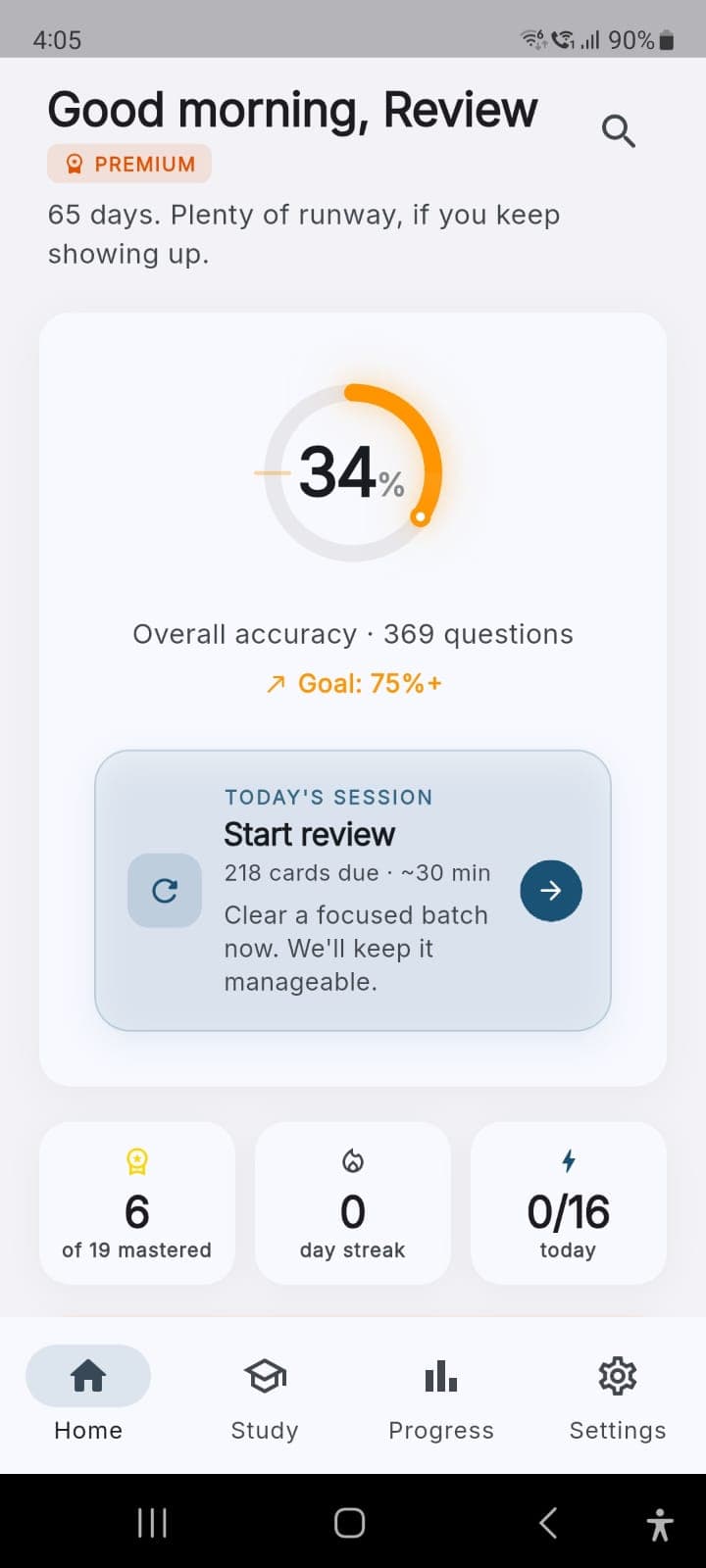
Ready to start the Lakeland license path?
The Florida license is statewide, but your first year is local. Get the license first, then choose the Polk County broker, lane, and follow-up rhythm that lets you build supervised reps.
The exam is statewide, so Lakeland candidates should verify local logistics and prepare against the same Florida outline used across the state.
Try a free Florida question | Run the readiness calculator | Download Pass Florida
Methodology
This guide separates official Florida licensing requirements from local Polk County career strategy. Employer and institutional references (Publix Super Markets headquartered in Lakeland and listed by the Central Florida Development Council as a top Polk County employer; Florida Polytechnic University as a public state polytechnic university chartered in 2012; Florida Southern College as a private liberal arts college with the largest single-site collection of Frank Lloyd Wright architecture in the world (a National Historic Landmark); Southeastern University as a private Christian university in Lakeland; Lakeland Regional Health and Watson Clinic as major medical anchors; Detroit Tigers Major League Baseball spring training in Lakeland since 1934 as the longest-standing MLB spring-training host-community relationship) are general public-domain facts. Historic-district references (Munn Park Historic District, South Lake Morton Historic District, Lake Hollingsworth Drive Historic District) reflect National Register of Historic Places (NRHP) listings; local historic-preservation overlays and exterior design review should be verified with the City of Lakeland Historic Preservation Board. Hurricane references include Hurricane Charley (NHC Tropical Cyclone Report, August 13, 2004, Category 4 landfall at Captiva Island), Hurricane Irma (NHC Tropical Cyclone Report, September 2017), and Hurricane Ian (NHC Tropical Cyclone Report, September 28, 2022, Category 4 landfall on the southwest Florida coast). Insurance references to wind mitigation (OIR-B1-1802), 4-point inspections, Citizens eligibility, and FEMA flood maps are general educational pointers, not coverage, rate, or eligibility advice. Local market guidance is practical editorial strategy based on stable regional patterns, not volatile price claims. Verify fees, appointment availability, broker costs, association or MLS costs, local ordinances, NRHP-historic-district overlays, community documents, condo documents, lending, insurance, flood, lakefront, and property-management details before spending money, scheduling, or advising a client.
Product note. Pass Florida is our Florida-specific exam prep app. This page references our own product, so the relationship is direct and disclosed. We do not claim to use copied exam questions, guarantee passage, or replace official DBPR, Florida Real Estate Commission (FREC), Pearson VUE, course provider, broker, Lakeland Association of REALTORS, Stellar MLS, legal, tax, insurance, lending, property-management, historic-preservation, or professional guidance. Pass Florida is independent exam prep and is not a DBPR-approved 63-hour pre-license course or continuing education.
This post is educational content about Florida real estate licensing and Lakeland career strategy. It is not legal, tax, brokerage, licensing, insurance, inspection, lending, HOA, condo, rental, historic-preservation, or professional advice. DBPR application fees, Pearson VUE exam fees, course tuition, fingerprint vendor pricing, Lakeland-area association and MLS dues, broker startup costs, and local market conditions can change. Always verify your specific path with DBPR, Pearson VUE, your course provider, your broker, your local association, the City of Lakeland Historic Preservation Board for historic-overlay questions, a licensed Florida property and casualty agent for insurance, and qualified counsel before paying fees, scheduling an exam, or making a career decision based on this article.
Sources
- DBPR Sales Associate Initial Application checklist
- DBPR Real Estate Associate Requirements
- DBPR RE 1 Sales Associate Application
- DBPR Real Estate Sales Associate Candidate Information Booklet
- Pearson VUE Florida Real Estate testing page
- Pearson VUE Florida Real Estate and Appraiser Fact Sheet
- DBPR mutual recognition information
- Lakeland Association of REALTORS
- Stellar MLS
- Publix Super Markets
- Central Florida Development Council: Top Employers
- Florida Polytechnic University
- Florida Southern College
- Florida Southern College: Frank Lloyd Wright at Florida Southern
- Lakeland Regional Health: About Us
- Watson Clinic: About Us
- City of Lakeland Historic Preservation
- City of Lakeland Design Review
- City of Lakeland: Detroit Tigers spring training in Lakeland
- National Hurricane Center Tropical Cyclone Report: Hurricane Charley (2004)
- National Hurricane Center Tropical Cyclone Report: Hurricane Irma (2017)
- National Hurricane Center Tropical Cyclone Report: Hurricane Ian (2022)
- Florida Office of Insurance Regulation OIR-B1-1802 Uniform Mitigation Verification Inspection Form
- Citizens Property Insurance Corporation: Get a Policy
- FEMA Flood Map Service Center