Before any calculation, label whether the line belongs to buyer or seller. Most wrong answers start on the wrong side.
Printable closing sheet
Florida real estate closing costs and settlement statement sheet
A printable closing-math sheet for sorting seller debits, buyer debits, credits, prorations, loan payoff, commission, document taxes, and net proceeds under exam time pressure.
Decide whether the line is something the party pays or receives. Sale price is seller credit and buyer debit.
Only calculate after party and debit-credit direction are labeled. The exam tests sorting more than arithmetic.
Settlement statement sorter
Line itemDebit or credit clueExam setup
Sale priceCredit seller, debit buyerAnchor both sides of the statement
Existing mortgage payoffSeller debitSubtract old loan from seller proceeds
CommissionUsually seller debit if stem says seller paysSale price x commission rate
Deed documentary stampsSeller debit unless stem shifts itSale price / 100 x rate, rounded as tested
New note stampsBuyer or borrower debitLoan amount / 100 x $0.35
Intangible taxBuyer or borrower debitLoan amount x 0.002
Unpaid property taxesSeller debit, buyer creditSeller owed days before closing
Prepaid association duesSeller credit, buyer debitBuyer reimburses seller for unused days
Named seller costsSeller debitSubtract from seller net
Named buyer costsBuyer debitAdd to buyer cash needed
Worked closing math
ProblemSetupAnswer
Seller net: sale $420,000, payoff $280,000, 6% commission, deed stamps $2,940, seller costs $3,100$420,000 - $280,000 - $25,200 - $2,940 - $3,100$108,760
Buyer funds: sale $400,000, 80% loan, buyer costs $8,500, seller tax credit $1,200$80,000 down + $8,500 - $1,200$87,300
Daily proration: annual tax $4,380, seller owes 120 days$4,380 / 365 x 120$1,440 seller debit
Doc stamps outside Miami-Dade: sale $350,000$350,000 / 100 x $0.70$2,450
Quick self-test
Can you sort the statement cold?
Cover the answer key first. If you miss two or more, do not reread the whole sheet. Drill the family that caused the miss.
More practice: passfloridarealestate.com/math-drill
- 1Warm-up
Sale $300,000, 6% commission. Find total commission.
- 2Party check
A buyer pays $4,200 in title insurance. Debit or credit, and on which side?
- 3Old loan trap
Seller sold for $400,000, had a $260,000 existing mortgage. Buyer took out an 80% new loan. What is the seller payoff amount?
- 4Proration
Annual taxes are $5,475. Seller owned the property 200 days before closing. Find the proration amount and credit side.
- 5Full stack
Sale $500,000, payoff $300,000, 6% commission, deed stamps $3,500, seller costs $4,200. Find seller net.
Answer key: setup and math
- 1Setup: Commission
$300,000 x 0.06 = $18,000
- 2Setup: Buyer line item
Buyer debit. The buyer is paying the charge.
Trap watch: do not credit the seller for a buyer-side cost.
- 3Setup: Old loan payoff
$260,000
Trap watch: seller pays off the old loan. The buyer's new loan is irrelevant to seller payoff.
- 4Setup: Daily proration
$5,475 / 365 x 200 = $3,000 seller debit, buyer credit
Seller owes the days they used before closing.
- 5Setup: Seller net
$500,000 - $300,000 - $30,000 - $3,500 - $4,200 = $162,300
Trap watch: this is not equity. Seller net keeps subtracting closing costs.
Try the setup
Use the calculators when the stack gets long.
The cheat sheet helps you sort. The calculators help you check seller net, buyer funds, and proration math without manual stacking.
Key Florida closing numbers
Florida numberExam-safe setupWatch for
Deed stamps outside Miami-Dade$0.70 per $100 of sale priceSeller usually pays unless stem shifts it
Deed stamps in Miami-Dade$0.60 per $100 of sale priceCounty fact changes the rate
Miami-Dade surtax$0.45 per $100 on most non-single-family deedsOnly apply when the stem gives that fact
Note stamps$0.35 per $100 of loan amountBorrower or buyer-side loan item
Intangible tax2 mills, or 0.002 x loan amountNot the same as documentary stamps
Unsecured note cap$2,450 maximum on unsecured notesUse only when the stem asks for unsecured note stamps
Proration year365 days unless the stem says otherwiseDo not import a 360-day assumption
Wrong-answer traps
TrapWrong answer patternRepair
Equity as netStops after sale price minus payoffKeep subtracting commission, stamps, costs, and prorations
Wrong sideCharges buyer for a seller cost or seller for a buyer costLabel the party before calculating
Old loan vs new loanUses buyer's new loan as seller payoffOld loan payoff belongs to seller net
Proration directionGives the credit to the wrong partyAsk who already paid or who owes for days used
Doc stamp baseUses loan amount for deed stampsDeed stamps use sale price unless the stem gives a different rule
Optional email copy
Send this closing sheet to your inbox.
Want a copy for later? We will email this closing PDF link, the party-first rule, and the common settlement-statement traps. Downloading the PDF does not require an email.
After the PDF
Use the sheet for review, then drill the skill.
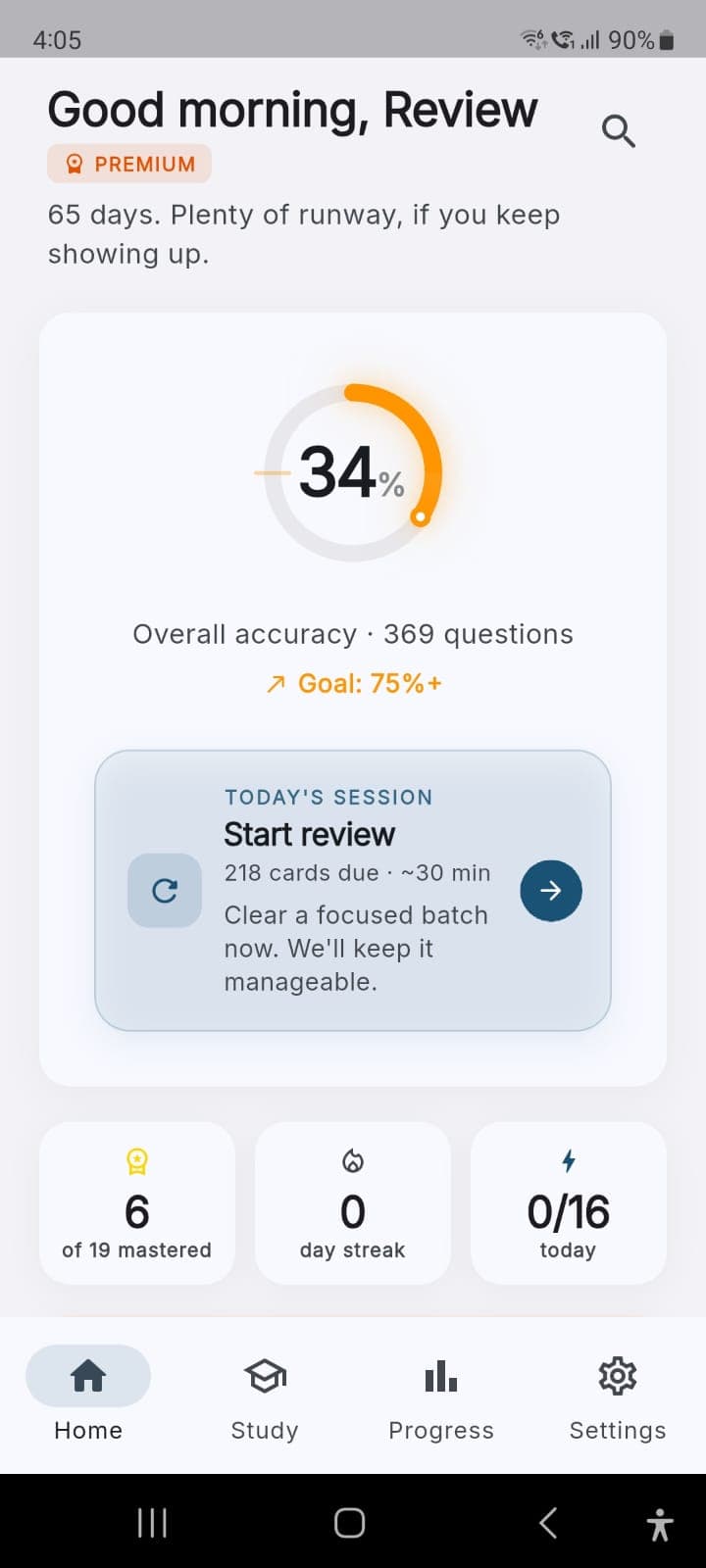
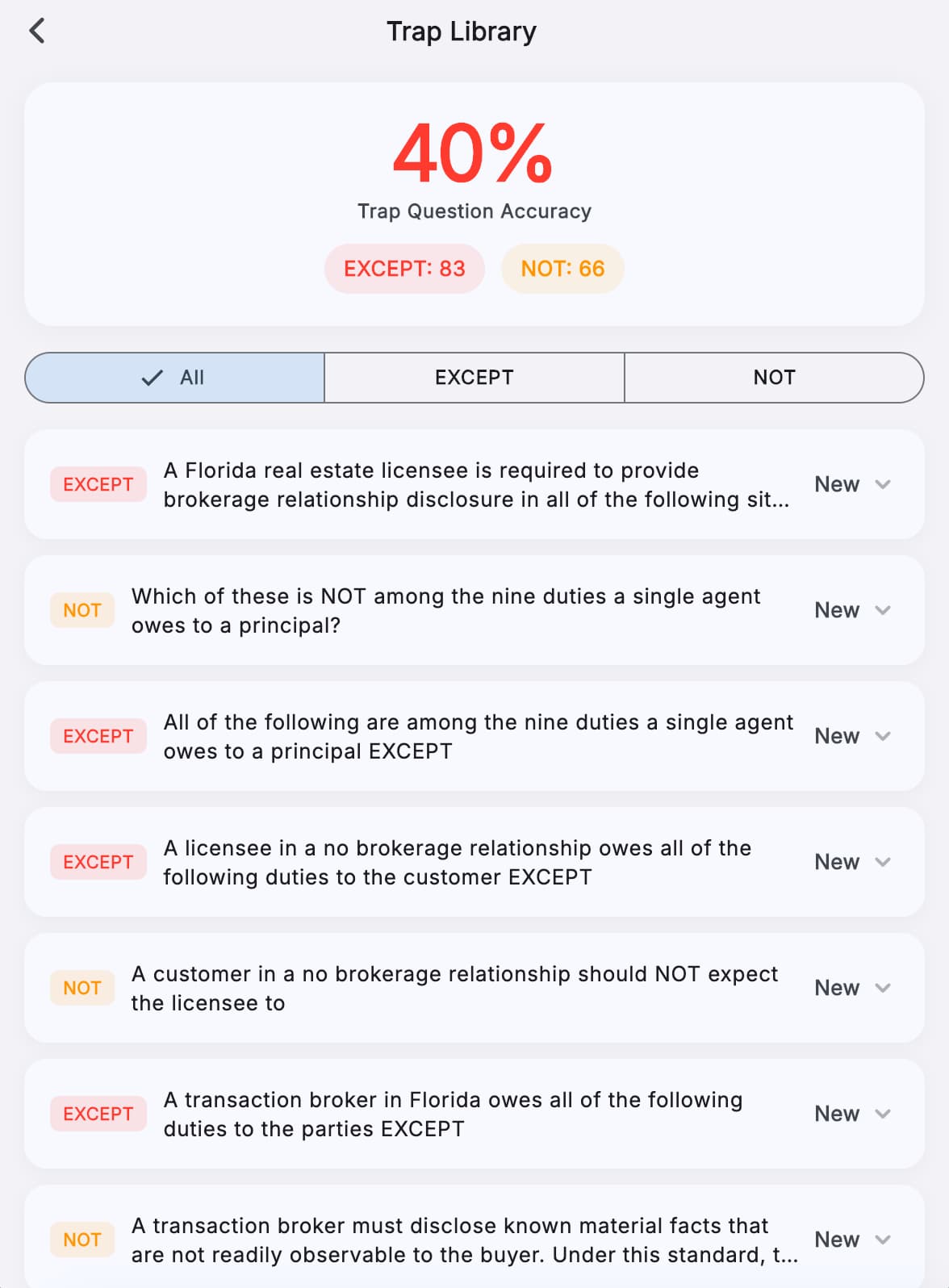
Printable PDFs are good for setup and recall. The app is where you turn those setups into mixed Florida-specific practice with Math Coach, Trap Library, and Confidence Calibration.
1,142 questionsMath CoachTrap Library$39.99 once
Exam prep only. Not a substitute for the 63-hour course, DBPR steps, or Pearson VUE scheduling.
FAQ
Closing cost and settlement questions
How do you calculate seller net on the Florida real estate exam?+
Start with sale price, then subtract the existing loan payoff, commission, deed documentary stamps, seller costs, and seller-side prorations. Do not stop at equity.
Is seller equity the same as seller net?+
No. Equity is value minus loan balance. Seller net still subtracts commission, payoff, documentary stamps, seller costs, and seller-side prorations.
Who usually pays deed documentary stamps in Florida exam questions?+
The seller commonly pays deed documentary stamps unless the stem shifts the cost. Always follow the stem.
What is the difference between old loan payoff and new loan amount?+
The old loan payoff is the seller's existing mortgage being paid off at closing. The new loan amount is the buyer's financing and belongs on the buyer side.
How are property taxes prorated at closing in Florida?+
For exam math, divide the annual tax by 365 days unless the stem gives a different convention. Then multiply by the number of days assigned to the party who owes or is being reimbursed.
Are intangible tax and documentary stamps the same thing?+
No. Documentary stamps are tax on documents such as deeds and notes. Intangible tax is a separate Florida tax on the loan amount, commonly tested as 2 mills or 0.002 times the loan amount.