What Florida actually does. Transaction broker is the default, dual agency is illegal, and doc stamps, intangible tax, and homestead are Florida-specific.
Printable Florida-only sheet
Florida-only differences for the Florida real estate exam
A quick-reference sheet for candidates who studied national real estate material and need to reset to Florida-specific exam rules.
Watch for in Florida, DBPR, FREC, Chapter 475, doc-stamp numbers, homestead context, and association facts.
Generic fiduciary duties, disclosed dual agency, state-neutral transfer tax, and locally added fair housing classes can all pull you off the Florida answer.
Florida-only reset map
TopicFlorida exam versionNational-content trap
Brokerage relationshipsTransaction broker is the default unless changed in writingAssuming agency labels work like other states
Dual agencyIllegal in FloridaTreating disclosed dual agency as allowed
Relationship dutiesTransaction broker, single agent, no brokerage have different duty listsUsing generic fiduciary duties for every client
FREC and DBPRDBPR houses FREC; FREC administers and enforces real estate license lawMixing agency names or powers
EscrowFlorida-specific timing and broker options matterUsing generic earnest-money habits
Documentary stampsFlorida deed stamps, note stamps, and intangible tax are testableSkipping state transfer-tax math
HomesteadFlorida homestead concepts appear in property, tax, and ownership questionsStudying only generic tax exemptions
Condos and HOAsFlorida association governance is part of the property-rights bucketTreating associations as a small side topic
Fair housingStatewide housing classes track the seven federal classesAdding local or non-housing classes to statewide exam answers
Quick self-test
Can you spot the Florida-specific answer cold?
Cover the answer key first. If you miss two or more, do not reread the whole sheet. Drill the family that caused the miss.
More practice: passfloridarealestate.com/try-a-question
- 1Warm-up
DBPR or FREC: which body administers and enforces Florida real estate license law?
- 2Dual agency
Same agent represents both buyer and seller with full written disclosure. Legal in Florida?
- 3Default relationship
A buyer signs no representation agreement with a Florida agent. What is the default?
- 4Fair housing
A Florida exam stem lists protected classes. Include source of income or only the federal seven?
- 5Transfer tax trap
National prep called this a state transfer tax. What does Florida actually call it, and what are the main loan taxes?
Answer key: setup and math
- 1Answer: FREC
DBPR houses FREC. FREC administers and enforces real estate license law.
Trap watch: do not treat DBPR and FREC as interchangeable.
- 2Answer: No, illegal
Florida does not allow dual agency even with full disclosure.
National content often treats disclosed dual agency as allowed.
- 3Answer: Transaction broker
Florida defaults to transaction broker unless the relationship is changed in writing.
National content often defaults to agency labels.
- 4Answer: Federal seven
Statewide exam housing classes track the federal seven.
Local jurisdictions can add classes, but do not add local classes to a statewide exam answer unless the stem says so.
- 5Answer: Documentary stamps, plus note stamps and intangible tax
Deed stamps apply to deeds. Note stamps and intangible tax apply to loan documents.
National transfer-tax wording can hide Florida doc stamp and intangible tax setups.
Optional email copy
Send this Florida-only sheet to your inbox.
Want a copy for later? We will email this Florida-only PDF link, the state-rule rule, and the common national-content traps. Downloading the PDF does not require an email.
After the PDF
Use the sheet for review, then drill the skill.
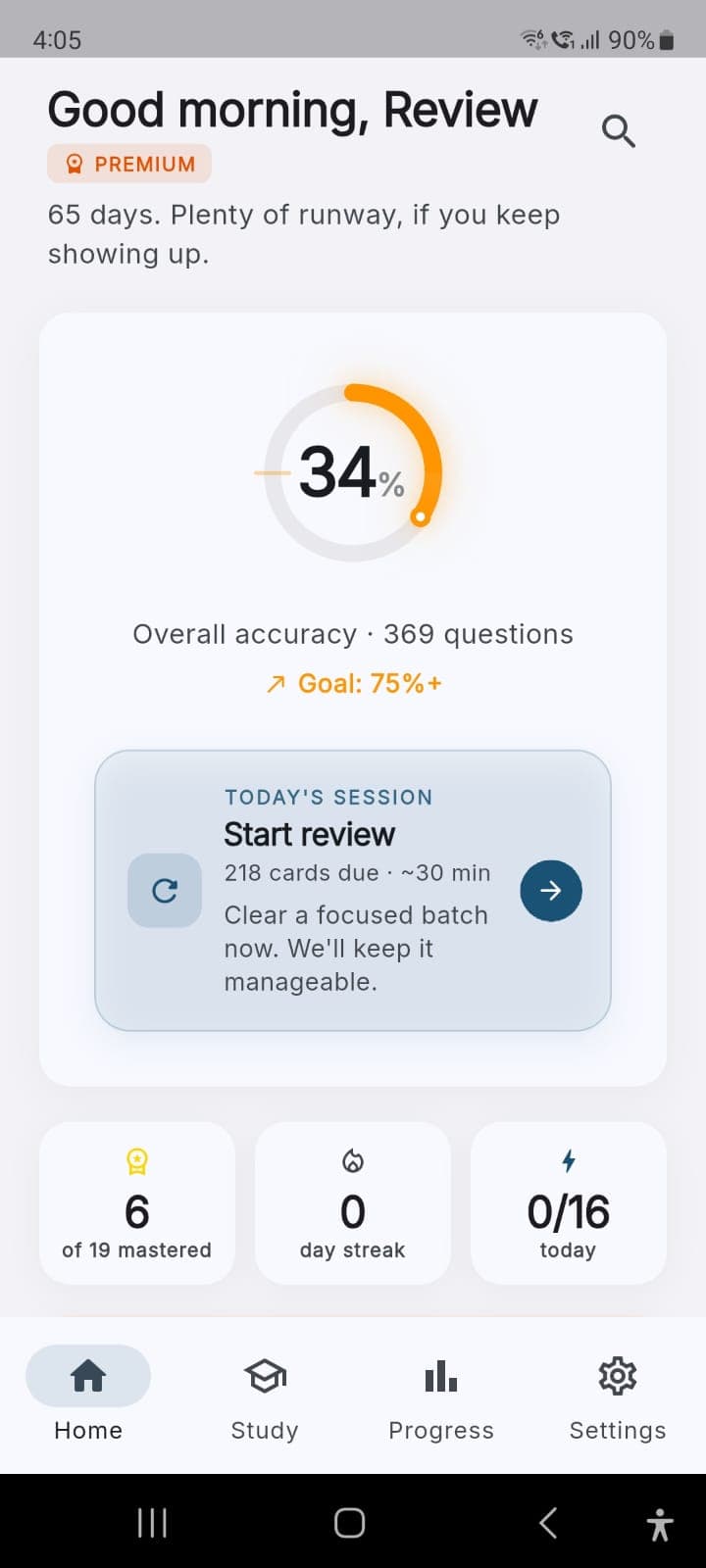
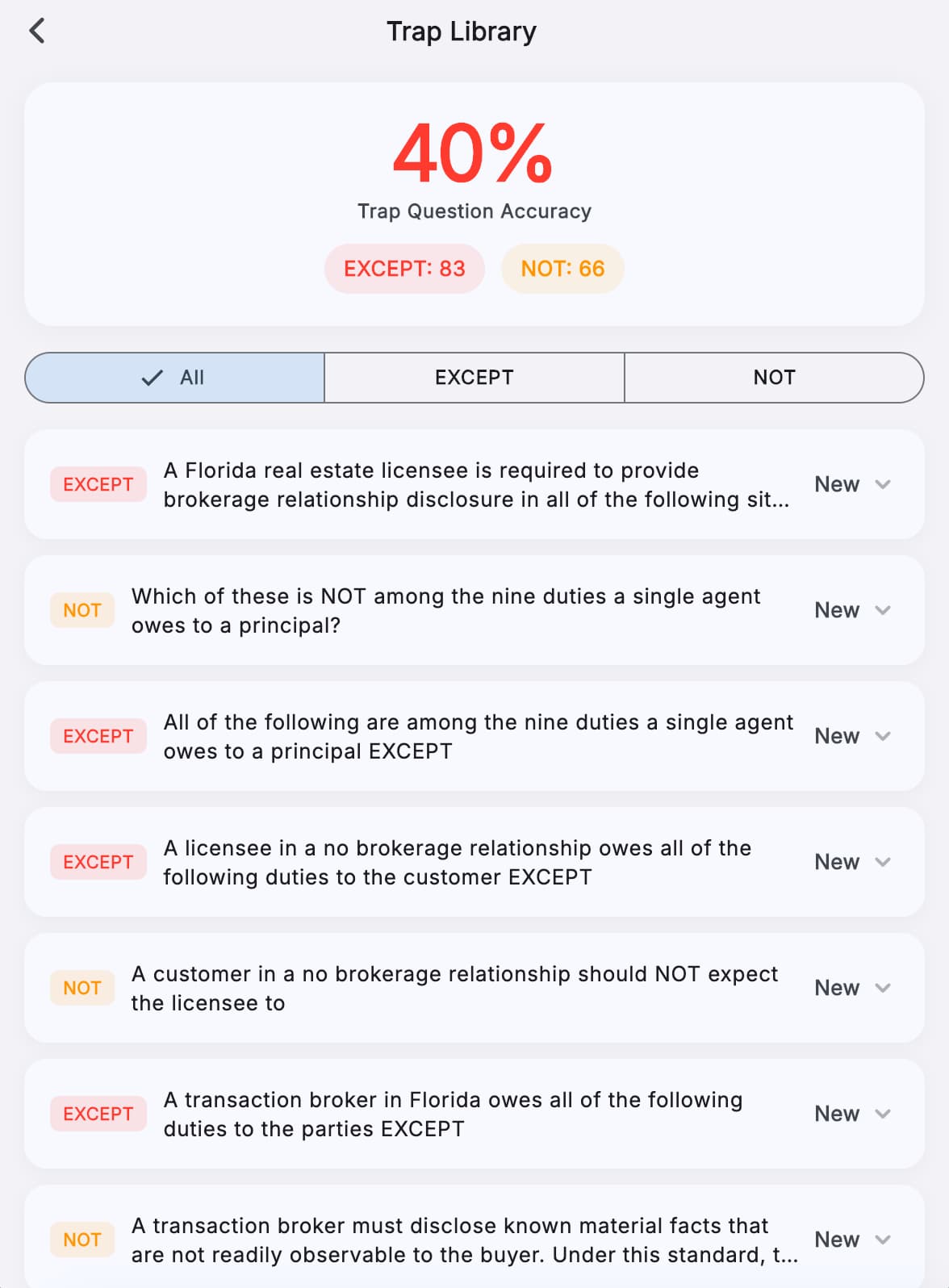
Printable PDFs are good for setup and recall. The app is where you turn those setups into mixed Florida-specific practice with Math Coach, Trap Library, and Confidence Calibration.
1,142 questionsMath CoachTrap Library$39.99 once
Exam prep only. Not a substitute for the 63-hour course, DBPR steps, or Pearson VUE scheduling.
FAQ
Florida-only exam questions
Why do I need a Florida-only differences sheet?+
National prep can blur rules that Florida tests specifically, including brokerage relationships, FREC and DBPR roles, escrow, documentary stamps, homestead, and association content.
Is dual agency allowed in Florida?+
No. Florida does not allow dual agency. Watch for stems that try to import generic agency language from other states.
What is the biggest national-prep trap?+
Using generic agency assumptions instead of Florida brokerage relationship rules. Transaction broker is a Florida-specific default concept candidates must know.
What should I study after this sheet?+
Study the brokerage matrix, Statute 475 sheet, and fair housing sheet because those are the places Florida-specific language most often matters.
What is the difference between FREC and DBPR?+
DBPR is the state department that houses professional licensing programs. FREC is the Florida Real Estate Commission inside that structure, and it administers and enforces Florida real estate license law for exam purposes.
Why is dual agency illegal in Florida?+
Florida brokerage law does not allow a licensee to represent both sides as a dual agent. On the exam, use the Florida relationship choices: transaction broker, single agent, or no brokerage relationship.