Hide the answer check before you read the prompt. Recognition without recall is what makes vocabulary feel easier than it is.
Printable recall cards
Florida real estate exam 50 most-missed terms recall cards
A printable active-recall sheet for the vocabulary pairs Florida sales associate candidates confuse most often. Cover the answer, say the distinction, then check the trap.
Say the distinction in one sentence before looking. If you cannot say it cleanly, move the card into tomorrow's review stack.
Read the trap after the answer. The exam usually misses students through a similar-looking term, not a missing definition.
Quick self-test protocol
Test yourself across the deck.
Shuffle to any 10 cards. Cover Check and Trap. Say the distinction in one sentence. If you miss 3 or more, move the deck to tomorrow's review stack.
More practice: passfloridarealestate.com/try-a-question
01
Transaction broker
AskWhat kind of representation is this?
CheckLimited representation. No fiduciary relationship.
TrapDo not call it dual agency.
02
Single agent
AskWhat duty level does the broker owe?
CheckFull fiduciary duties to one party.
TrapLook for loyalty, obedience, and full disclosure.
03
No brokerage relationship
AskDoes the licensee represent the person?
CheckNo representation, but limited statutory duties still apply.
TrapNo relationship does not mean no duties.
04
Material fact
AskWhat kind of fact must be disclosed?
CheckA fact that affects residential value and is not readily observable.
TrapOpinion and puffing are different from material fact.
05
Fiduciary
AskWhat relationship creates loyalty-style duties?
CheckA relationship of trust, such as single-agent representation.
TrapTransaction brokers do not owe fiduciary duties.
06
Commingling
AskWhat happened to the money?
CheckClient funds were mixed with broker or personal funds.
TrapSpending is not required for commingling.
07
Conversion
AskWhat happened to the escrow money?
CheckClient funds were used or taken for an unauthorized purpose.
TrapConversion is worse than mixing.
08
Escrow
AskIs this the deposit, account, or holding arrangement?
CheckThe holding arrangement for money or documents until conditions are met.
TrapEarnest money is the deposit, not the whole arrangement.
09
Trust account
AskWhere are other people's funds held?
CheckA broker account for funds belonging to others.
TrapDo not put operating funds here except allowed minimal amounts.
10
Earnest money
AskWhat is the buyer giving with the offer?
CheckA good-faith deposit tied to the contract.
TrapIt is not the same term as escrow.
11
Deed
AskDocument or ownership right?
CheckThe written instrument that transfers title.
TrapA deed is not title itself.
12
Title
AskDocument or ownership right?
CheckThe legal right of ownership.
TrapHolding paper is not the same as holding title.
13
General warranty deed
AskHow broad is the warranty?
CheckBroadest deed warranty, including claims before the grantor owned it.
TrapStrongest buyer protection.
14
Special warranty deed
AskWhat time period is covered?
CheckOnly the grantor's ownership period.
TrapSpecial does not mean stronger than general.
15
Quitclaim deed
AskWhat warranty is promised?
CheckNo warranty. Transfers whatever interest the grantor has, if any.
TrapIt can be valid even if little title passes.
16
Easement
AskWhat right does someone have?
CheckA right to use another person's land for a specific purpose.
TrapSpecific use right beats broad encumbrance if both appear.
17
Encumbrance
AskBroad category or specific use right?
CheckAny claim, lien, restriction, or interest affecting title or use.
TrapAn easement is one type of encumbrance.
18
Lien
AskMoney claim or physical problem?
CheckA money claim against property as security for a debt.
TrapTax liens can attach even with no physical defect.
19
Encroachment
AskMoney claim or physical intrusion?
CheckA physical improvement crosses onto another property.
TrapThink survey, fence, driveway, or building line.
20
Fixture
AskPersonal property or real property now?
CheckPersonal property that became real property by attachment or intent.
TrapAsk whether it is intended to stay with the property.
21
Trade fixture
AskWho installed it and why?
CheckBusiness tenant's attached item that usually remains personal property.
TrapTrade fixture is the tenant-business exception.
22
Tenancy in common
AskIs there automatic survivorship?
CheckNo automatic survivorship. Shares can be unequal.
TrapDefault co-ownership answer when survivorship is missing.
23
Joint tenancy
AskWhat extra feature may exist?
CheckCo-ownership that may include survivorship if properly created.
TrapLook for right of survivorship language.
24
Tenancy by the entireties
AskWho can hold this ownership form?
CheckMarried spouses, with survivorship features.
TrapFlorida exam stems often test the married-couple clue.
25
Executed contract
AskSigned or fully performed?
CheckFully performed by all parties.
TrapEveryday speech says signed. Exam usage often means completed.
26
Executory contract
AskAre duties still pending?
CheckYes. Some performance remains.
TrapA signed purchase contract before closing is usually executory.
27
Void contract
AskDoes it have legal effect?
CheckNo legal effect from the beginning.
TrapIllegal purpose is the classic clue.
28
Voidable contract
AskWho gets the choice?
CheckOne protected party may enforce or cancel.
TrapVoidable is not automatically dead.
29
Assignment
AskIs the original party released?
CheckRights transfer, but original party may remain liable.
TrapNo release language usually means assignment.
30
Novation
AskWas a party replaced and released?
CheckAll parties agree to substitute a new party and release the old one.
TrapRelease is the signal.
31
Estoppel certificate
AskWhat does it confirm?
CheckLease or association facts relied on by another party.
TrapDo not confuse with estoppel as a general legal doctrine.
32
Lis pendens
AskWhat public notice is filed?
CheckA notice that litigation may affect title.
TrapIt is notice, not a lien by itself.
33
Caveat emptor
AskWho bears the risk?
CheckBuyer beware, subject to disclosure rules.
TrapDo not use it to erase known material fact disclosure.
34
Police power
AskWhich PETE power is this?
CheckGovernment power to regulate for health, safety, morals, and welfare.
TrapZoning is the classic clue.
35
Eminent domain
AskWhich PETE power takes property?
CheckGovernment taking for public use with compensation.
TrapCondemnation is the process.
36
Taxation
AskWhich PETE power raises revenue?
CheckGovernment power to tax real property.
TrapDo not confuse with special assessment facts.
37
Escheat
AskWhich PETE power handles no heirs?
CheckProperty reverts to the state when an owner dies with no will or heirs.
TrapThis is not foreclosure.
38
Severalty
AskHow many owners?
CheckOwnership by one person or entity.
TrapSeveralty sounds plural but means one owner.
39
Appurtenant easement
AskWhat transfers with the land?
CheckAn easement tied to dominant and servient parcels.
TrapIt usually runs with the land.
40
Easement in gross
AskWho holds the right?
CheckA personal or company right to use land, not tied to ownership of a dominant parcel.
TrapUtility easement clues often point here.
41
Subordination
AskWhat changes lien priority?
CheckOne lienholder agrees to take a lower priority.
TrapIt is priority change, not loan assumption.
42
Acceleration clause
AskWhat happens after default?
CheckLender may call the entire loan balance due.
TrapDo not confuse with alienation.
43
Alienation clause
AskWhat happens on transfer?
CheckLoan may become due when property is sold or transferred.
TrapThink due-on-sale.
44
Defeasance clause
AskWhat happens when loan is paid?
CheckBorrower receives full title rights after debt satisfaction.
TrapOlder mortgage vocabulary, still exam-able.
45
Riparian rights
AskWhich water touches the property?
CheckRights tied to rivers, streams, and other flowing water.
TrapDo not use the oceanfront answer for river or stream facts.
46
Littoral rights
AskWhich water touches the property?
CheckRights tied to oceans, seas, lakes, and other large standing water.
TrapBeachfront and lakefront clues usually point here.
47
Liquidated damages
AskWhat remedy was agreed ahead of time?
CheckA preset contract damage amount.
TrapEarnest money can be the clue.
48
Specific performance
AskWhat court remedy forces performance?
CheckCourt orders a party to perform the contract.
TrapCommon in real estate because land is unique.
49
Actual notice
AskHow did the person know?
CheckDirect knowledge.
TrapNot the same as public-record notice.
50
Constructive notice
AskHow should the person know?
CheckNotice created by public records or visible facts.
TrapRecording creates the classic clue.
Optional email copy
Send these recall cards to your inbox.
Want a copy for later? We will email this recall-card PDF link, the active-recall rule, and the most common vocabulary traps. Downloading the PDF does not require an email.
After the PDF
Use the sheet for review, then drill the skill.
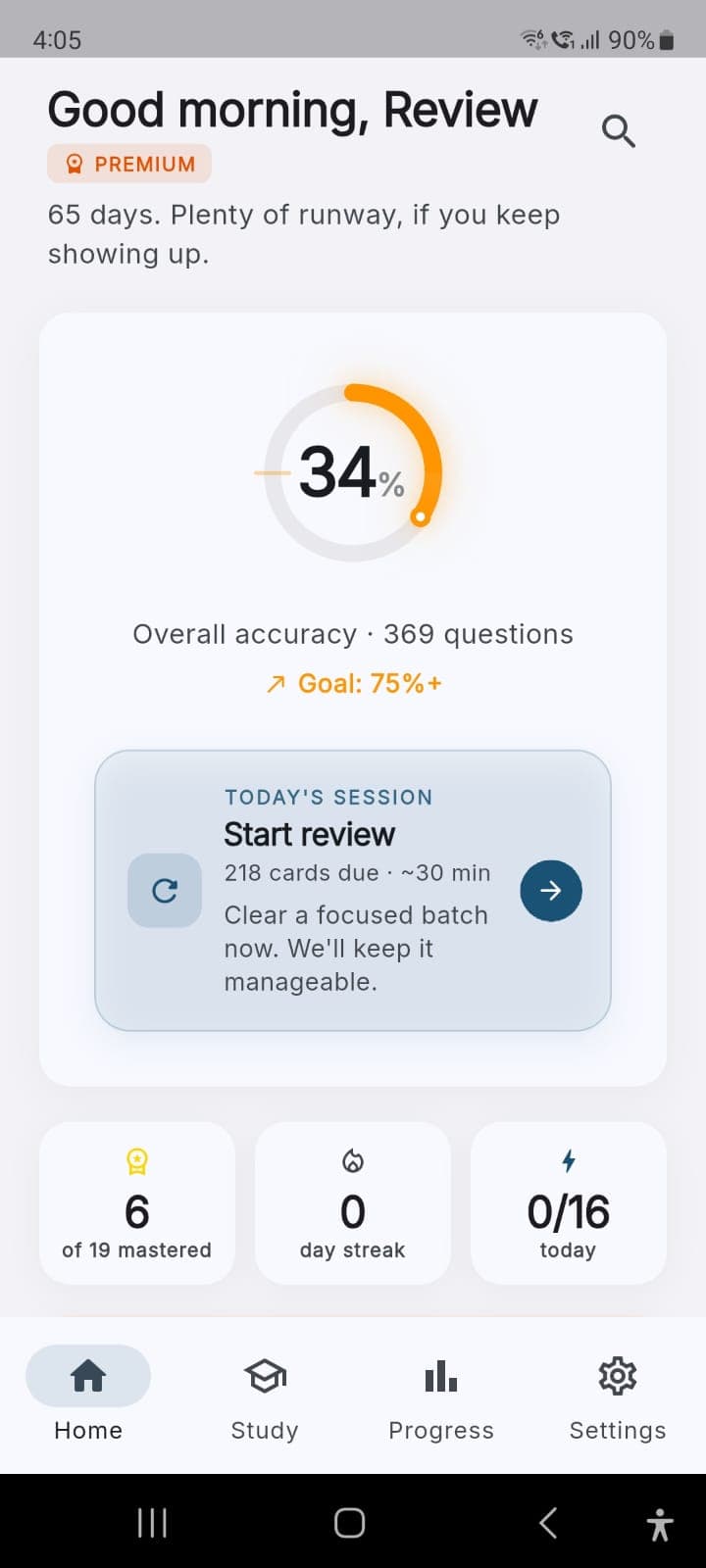
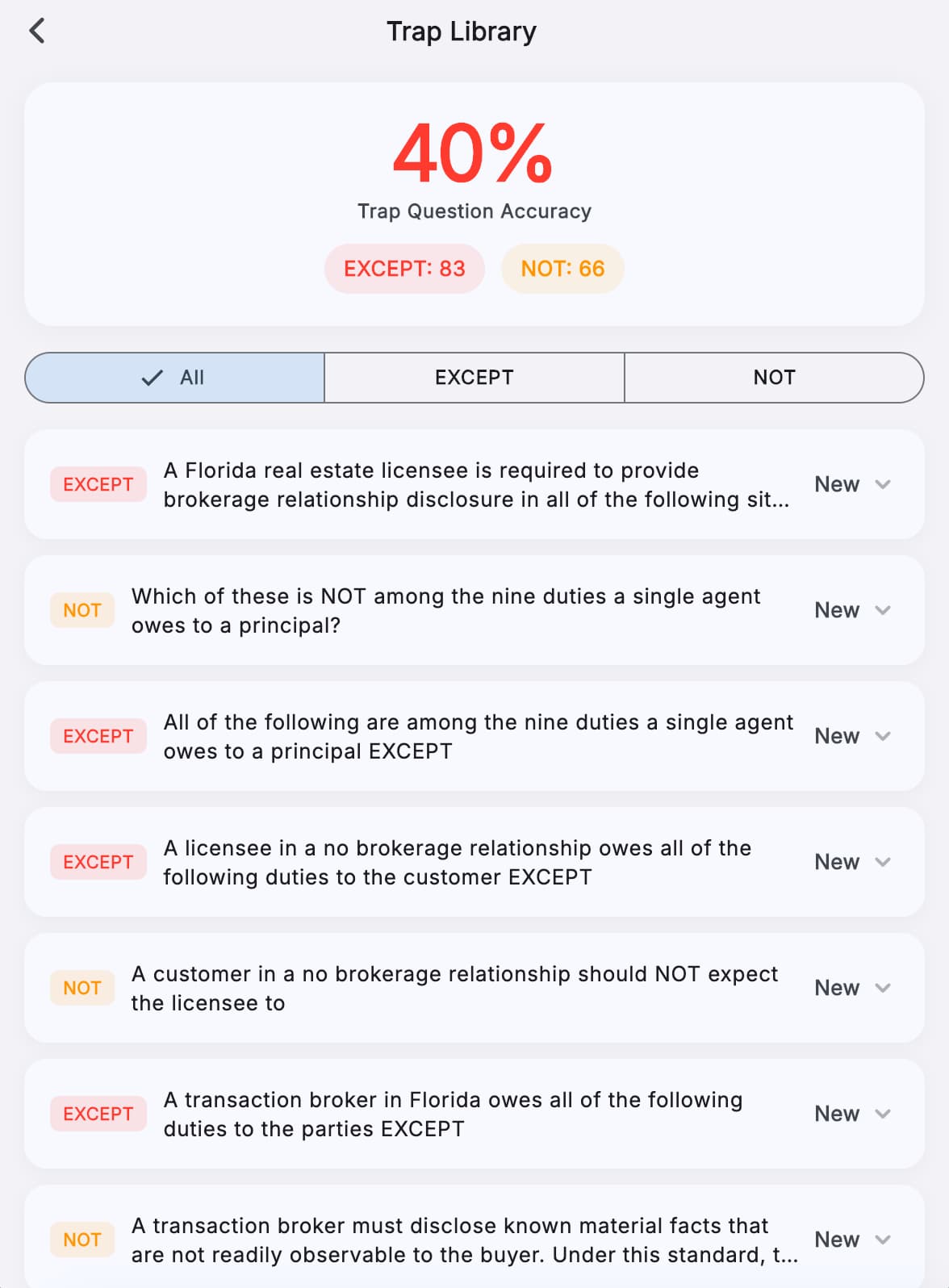
Printable PDFs are good for setup and recall. The app is where you turn those setups into mixed Florida-specific practice with Math Coach, Trap Library, and Confidence Calibration.
1,142 questionsMath CoachTrap Library$39.99 once
Exam prep only. Not a substitute for the 63-hour course, DBPR steps, or Pearson VUE scheduling.
FAQ
Vocabulary recall card questions
How should I use the recall cards?+
Cover the answer check, say the distinction out loud, then read the trap. Move missed cards into tomorrow's review stack.
Are these official DBPR most-missed terms?+
No. Most-missed means commonly confused in exam-prep practice, not an official DBPR miss report.
Why use recall cards instead of just reading definitions?+
The exam tests scenario recognition. Active recall forces you to explain the term before answer choices make a wrong option feel familiar.
What should I pair with vocabulary review?+
Pair terms with trap-word practice and the brokerage or title sheets, because vocabulary misses often happen inside scenario questions.
What is the best way to memorize real estate terms?+
Use active recall instead of rereading. Cover the answer, say the distinction in your own words, then check the trap so you learn why a similar term would be wrong.
Are vocabulary terms enough to pass the Florida real estate exam?+
No. Vocabulary helps, but the Florida exam usually tests terms inside scenarios. Pair recall cards with mixed practice so you can recognize the word, the fact pattern, and the trap answer.